A painful shoulder that catches when reaching into a cupboard, a knee that limits your walk, or a stiff hip that disrupts sleep can make everyday life feel much smaller. Ultrasound guided joint injections are one option that may help when joint pain is not settling with appropriate self-management, rehabilitation or other conservative treatment.
The purpose is not simply to inject a joint and hope for the best. Ultrasound allows the clinician to assess the area in real time and guide a fine needle towards the intended space. This can support a more precise procedure and, crucially, a more informed conversation about whether an injection is likely to be the right next step for you.
When might a joint injection be considered?
Joint injections may be considered for pain and inflammation affecting joints such as the shoulder, knee, hip, ankle, wrist or small joints of the hands and feet. They can sometimes be helpful for osteoarthritis, inflammatory flare-ups, bursitis around a joint, joint irritation following injury, or pain that is preventing progress with rehabilitation.
An injection is not automatically the best answer to persistent pain. The source of symptoms may instead be a tendon, ligament, muscle, nerve or referred pain from another area. A careful assessment matters because the treatment needs to match the diagnosis, your medical history, your goals and the demands of your daily life.
For some people, the immediate goal is to reduce pain sufficiently to sleep comfortably or return to normal walking. For others, short-term relief may create a useful window to build strength, restore movement and return to a sport or activity with greater confidence. The best outcomes tend to come when an injection sits within a wider plan rather than replacing one.
How ultrasound guided joint injections work
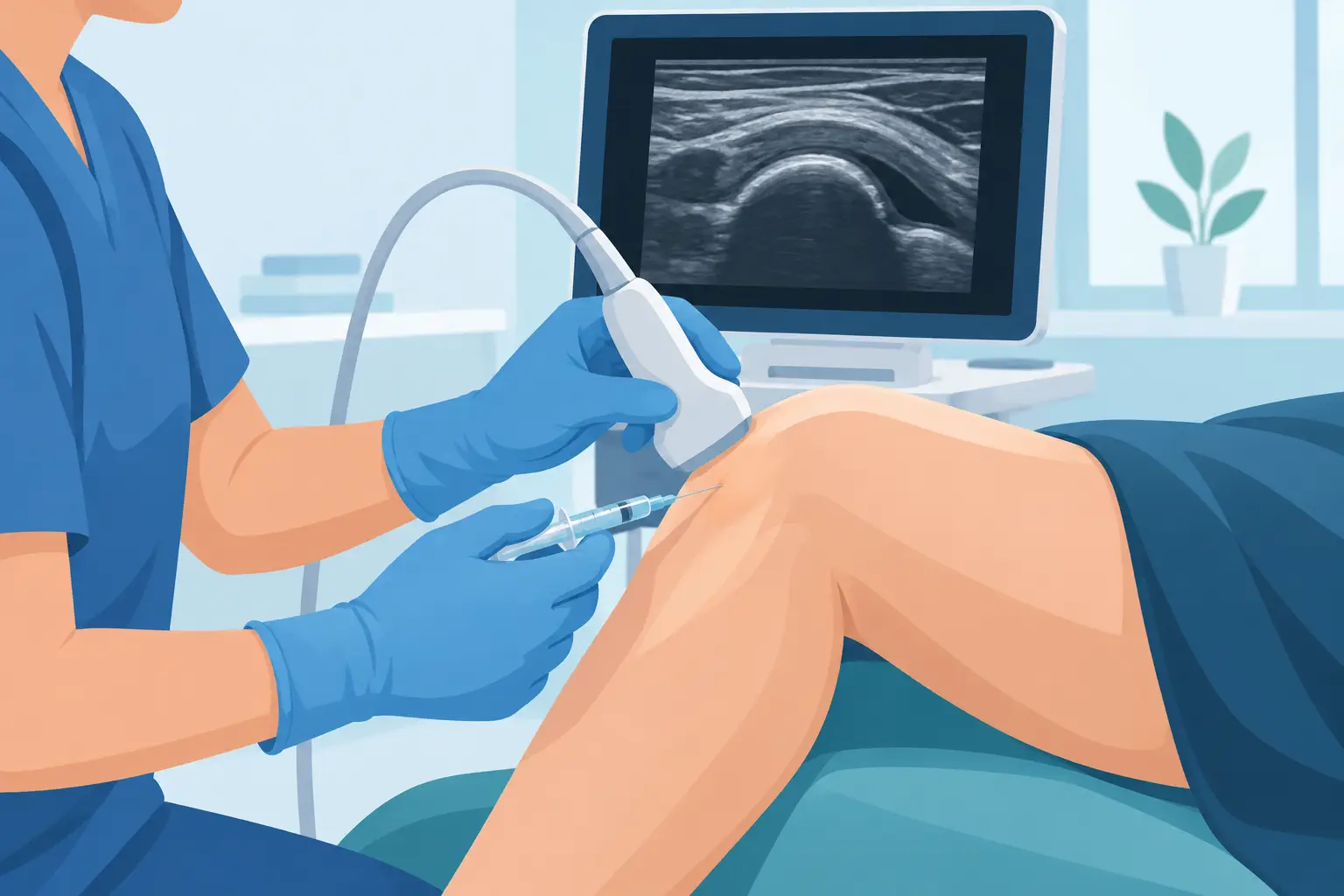
Ultrasound uses high-frequency sound waves to produce a live image of structures beneath the skin. During an injection, the clinician can use this image to identify relevant anatomy and follow the needle path as it approaches the joint or surrounding target area.
This is particularly valuable where the joint is small, deep, altered by arthritis, or close to structures that should be avoided. It can also help confirm whether there is fluid, inflammation or another feature that may influence the procedure. Ultrasound does not provide every answer – for example, X-rays or MRI scans may be needed in some circumstances – but it is a useful assessment and treatment tool in the same appointment.
Depending on the clinical findings, an injection may contain a local anaesthetic, corticosteroid, or both. Local anaesthetic can provide temporary numbness, which may also offer useful diagnostic information. Corticosteroid is used to settle inflammation in appropriate cases. Your clinician should explain the proposed medication, why it has been recommended and the alternatives before you decide whether to proceed.
What happens at the appointment?
Your appointment should begin with a focused assessment. This includes discussing your symptoms, what has already been tried, relevant scans or letters, medication, allergies and your general health. It is helpful to mention conditions such as diabetes, blood-thinning medication, immune suppression, current infection, pregnancy or previous reactions to injections, as these can affect whether treatment is suitable or how it is planned.
The clinician will examine the painful area and may scan it with ultrasound before recommending any procedure. Sometimes the scan confirms that an injection is likely to be helpful. At other times, it points towards rehabilitation, further investigation or a different treatment. Deciding not to inject can be just as valuable when it helps you avoid an intervention that is unlikely to address the real problem.
If you choose to go ahead, the skin is cleaned carefully and sterile technique is used. Ultrasound gel and a probe cover allow the clinician to view the target throughout the procedure. You may feel pressure or a brief sharp sensation, but the injection itself is usually quick. Afterwards, you will be given individual advice about activity, pain relief and what to expect over the following days.
What relief can you expect?
Response varies. If local anaesthetic is used, you may notice a temporary reduction in pain soon after the procedure. This can wear off later the same day. Steroid medication may take several days, and occasionally up to two weeks, to have its full effect.
Some people experience meaningful pain relief that lasts for months, while others have a smaller or shorter-lived response. An injection cannot reverse established joint arthritis or repair every structural change seen on a scan. It can, however, reduce pain and irritation enough to make movement and rehabilitation more manageable.
A temporary post-injection flare is possible. The area may feel more sore for 24 to 48 hours before settling. Planning a quieter day afterwards and following the advice provided can be sensible. If pain becomes severe, the joint becomes hot, red or increasingly swollen, or you feel unwell or feverish, seek urgent medical advice, as infection is rare but requires prompt assessment.
Benefits, limitations and potential risks
The main potential benefit of ultrasound guidance is improved confidence that medication is being placed in the intended location. It also enables the clinician to assess the relevant structures at the point of care. For people whose symptoms are stopping them from moving normally, this can be a practical part of a targeted plan.
There are limits and risks to discuss openly. No injection can guarantee pain relief, and repeated steroid injections are not appropriate for every joint or every person. Corticosteroid can temporarily affect blood sugar levels, which is especially relevant for people with diabetes. Other possible risks include bruising, bleeding, skin colour change, temporary facial flushing, allergic reaction, tendon weakening when injections are placed around certain tendon tissues, and very rarely infection or injury to nearby structures.
The balance of benefit and risk is individual. A clinician may advise against an injection if there is an active infection, a concern about medication interactions, inadequate diagnostic clarity, or a better alternative available. Asking why this treatment is being recommended, what result is realistic, and what the next step will be if it does not help are all sensible questions.
Rehabilitation after ultrasound guided joint injections
Pain relief is most useful when it helps you do something constructive with it. That may mean restarting a progressive strengthening programme, improving joint mobility, adjusting training load, changing a work set-up or addressing walking mechanics. Rest alone is rarely a complete long-term plan for a painful joint.
The timing of rehabilitation depends on the joint treated, the medication used and your symptoms. Some people are advised to avoid strenuous activity for a short period, while gentle movement can often be encouraged. Your clinician can help you understand when to return to activities such as running, lifting, gardening or sport, rather than relying on a one-size-fits-all rule.
At Faringdon Wellbeing Clinic, ultrasound-led intervention can be coordinated with physiotherapy, osteopathy, podiatry or movement-based support where appropriate. This joined-up approach is useful when pain has affected more than one part of life – for example, a knee problem that has changed how you walk, reduced your fitness and made stairs feel less secure.
Preparing for a more useful consultation
Bring any relevant scan reports, clinic letters and a list of your current medication. Think about the movements that aggravate symptoms, what eases them, how long the problem has been present and what you would most like to return to. Clear goals help shape a plan that is meaningful to you, whether that is walking the dog without stopping, getting back to tennis or managing a full day at work more comfortably.
Wear clothing that allows easy access to the area being assessed. Arrange your journey home according to the advice given, particularly if the injection involves a lower-limb joint and temporary numbness may affect comfortable driving. You do not need to decide in advance that you want an injection. The consultation is the place to understand your options and make a decision with the clinician.
Joint pain can be frustrating, especially when it has narrowed the activities that help you feel like yourself. A well-chosen, carefully guided injection may provide a useful opportunity to move forward – with a plan that supports not only the joint, but your confidence in using it again.