Blocked ears can make everyday conversations, television and phone calls feel unexpectedly difficult. Ear wax removal microsuction offers a precise way to clear wax that is affecting hearing or comfort, following an assessment of your ears and symptoms.
Wax is not a sign of poor hygiene. It is a normal substance produced by the ear to protect the ear canal, trap dust and help maintain healthy skin. Problems arise when wax builds up, becomes hard or dry, or moves in a way that creates a blockage. The result may be muffled hearing, a feeling of fullness, itching, tinnitus, discomfort, or hearing aids that whistle or seem less effective.
What is ear wax removal microsuction?
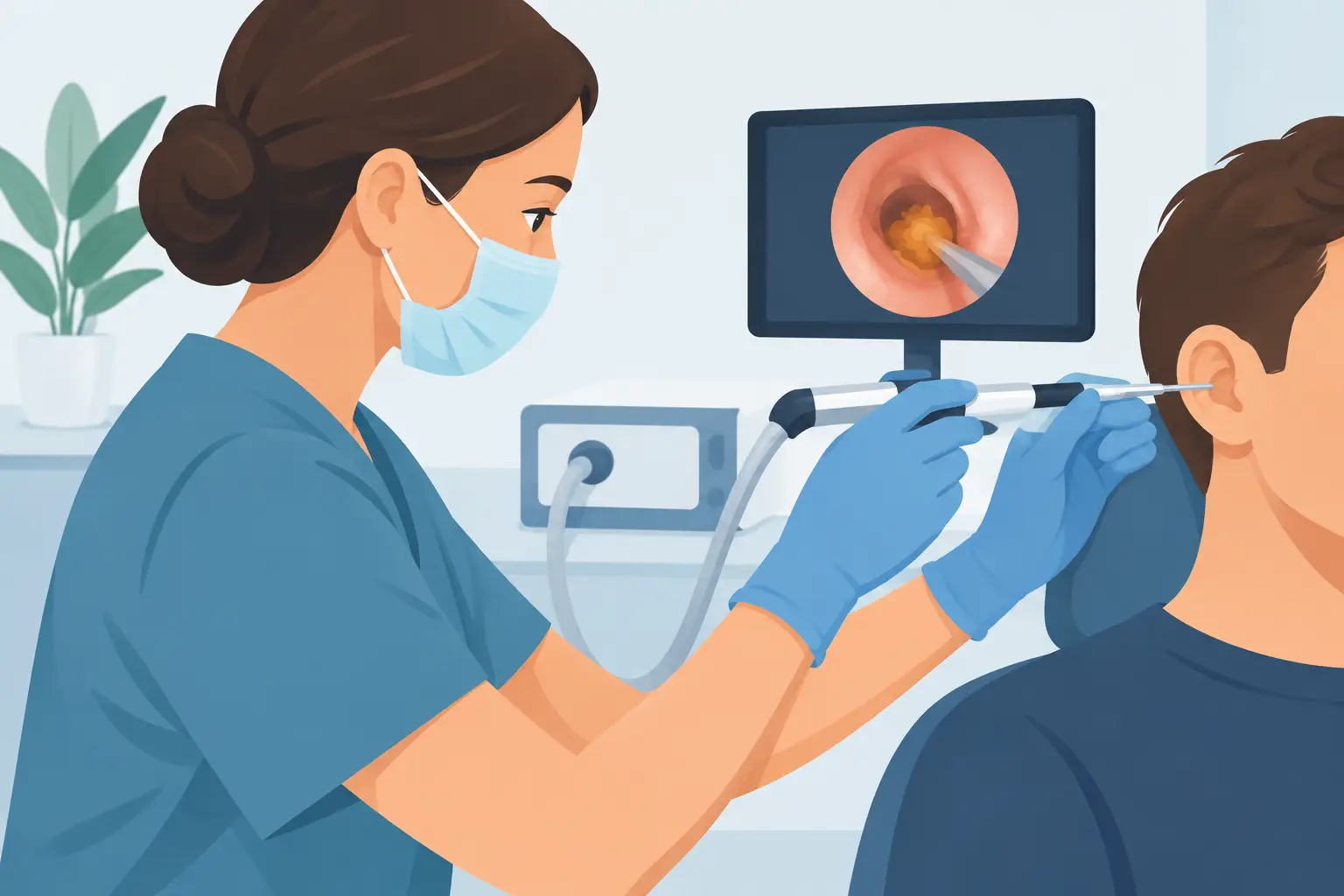
Microsuction is a clinician-led technique used to remove ear wax with a small suction device. The practitioner examines the ear canal using magnification and a light, then carefully removes visible wax through a fine suction tube. Unlike traditional ear syringing, it does not involve flushing water into the ear.
This direct view is one of the main reasons microsuction is often preferred. It allows the clinician to work with accuracy and to adapt the approach to the amount, position and consistency of wax present. Some wax may lift away quickly; hard, impacted wax can take longer and may need softening drops before removal is attempted.
At Faringdon Wellbeing Clinic, this service is provided as part of practitioner-led hearing care, with your comfort and clear explanation kept central throughout the appointment.
When microsuction may be helpful
An ear can feel blocked for reasons other than wax, so an examination comes first. If wax is found to be contributing to your symptoms, microsuction may be an appropriate option. It can be particularly useful for people who have recurring wax build-up, wear hearing aids or earplugs, or have found that over-the-counter drops have not fully resolved the problem.
You may wish to arrange an assessment if hearing has become dull in one or both ears, you notice persistent fullness or itching, or you are struggling to use your hearing aids comfortably. Some people only become aware of a build-up when a hearing assessment or hearing-aid check identifies wax in the canal.
It is worth avoiding the assumption that every blocked ear needs wax removed. A cold, allergies, sinus congestion, infection, pressure changes after flying, or a problem beyond the ear canal can all affect how your ears feel. A careful examination helps distinguish between these possibilities and guides the next step.
Symptoms that need medical advice first
Microsuction is not a substitute for urgent medical assessment. Seek prompt medical advice if you have sudden hearing loss, severe ear pain, discharge or bleeding from the ear, significant dizziness, facial weakness, or a high temperature with ear symptoms. These signs may point to a condition that needs medical treatment rather than wax removal.
You should also tell your clinician if you have had ear surgery, a perforated eardrum, grommets, recurrent ear infections, or previous complications with wax removal. These details do not automatically rule out treatment, but they matter when deciding what is safest for you.
What happens during a microsuction appointment?
Your appointment begins with questions about your symptoms, hearing, medical history and any previous ear problems. The clinician will then inspect your ears. This confirms whether wax is present and whether it is likely to be responsible for the issue you have noticed.
If removal is suitable, you will usually sit comfortably while the clinician uses a microscope or magnified view and a quiet suction instrument to remove the wax. You may hear suction sounds, and some people notice a temporary tickling sensation or a change in pressure. It should not be painful, but it is always appropriate to say if you feel uncomfortable or need a pause.
The length of treatment varies. Soft, loose wax can often be removed efficiently, while compacted wax may require more time. Occasionally, the wax is too dry or firmly positioned to remove comfortably in one session. In that case, softening drops may be recommended before a further appointment. This is a sensible, patient-centred decision rather than a failed treatment.
Once the canal is clear, the ear is checked again. Many people notice an immediate improvement in hearing and relief from the blocked sensation, although this depends on whether wax was the only cause of their symptoms.
Should you use drops before microsuction?
Softening drops can make removal easier, particularly where wax is hard, dry or deeply impacted. Olive oil-based ear drops are commonly used for this purpose, but the right advice depends on your ear history. Do not use drops if you have been advised not to because of a known perforation, grommets, ear surgery, active infection or another specific ear condition.
If you are unsure, ask before starting drops. Using cotton buds, hair grips or other objects inside the ear is not recommended. These can push wax further down the canal, irritate the skin and increase the risk of injury. The ear canal is self-cleaning for many people, so regular probing is more likely to create a problem than solve one.
Why choose microsuction rather than syringing?
Both water irrigation and microsuction have been used for wax removal, but they work differently. Microsuction removes wax under direct vision without introducing water into the canal. This can be reassuring for people who have had discomfort with water-based methods in the past or who prefer a more controlled approach.
That does not mean one method is universally right for every person. Suitability depends on your symptoms, the state of your ear canal and eardrum, your medical history, and the nature of the wax. The value of a clinician-led appointment is that the method is considered in the context of your individual ears, rather than relying on a one-size-fits-all solution.
Looking after your ears after wax removal
After successful removal, most people can return to their usual routine straight away. There is usually no need to clean inside the ears or use drops routinely unless advised. If you use hearing aids, cleaning and maintaining them as instructed can help reduce the chance of wax interfering with their function.
Some people naturally produce more wax than others. Narrow ear canals, the use of hearing aids or earbuds, certain skin conditions, and simply individual wax consistency can all play a part. If wax tends to recur, planned checks may be more useful than waiting until hearing becomes noticeably affected.
Avoid booking wax removal solely because you feel you should have it done regularly. If there is no troublesome wax, removal is not needed. The most appropriate interval is individual and should be based on your symptoms, examination findings and any hearing-device needs.
Common questions about microsuction
Is microsuction painful?
Microsuction is generally well tolerated. You may hear unfamiliar noises and feel a mild tickle or brief pressure change, especially when wax sits close to the eardrum. Tell the clinician straight away if anything feels painful, sharp or overwhelming so the treatment can be adjusted or paused.
Can microsuction remove all wax in one appointment?
Often it can, but not always. Hard or impacted wax may need a period of softening with suitable drops before it can be removed safely and comfortably. A staged approach is sometimes the best option.
Will removing wax improve tinnitus?
Wax can occasionally make tinnitus more noticeable by reducing outside sound, and clearing a blockage may help in that situation. Tinnitus has many possible causes, however, so it should not be assumed that wax removal will resolve it. Persistent or new tinnitus deserves appropriate assessment, especially if it affects one ear or occurs with hearing changes.
If your ears feel blocked, hearing seems reduced, or your hearing aids are no longer performing as expected, a professional examination gives you a clearer answer than trying to manage the problem at home. A calm, carefully assessed appointment can help restore comfort and confidence in the sounds around you.