Podiatrists assess, diagnose and treat conditions of the foot. When the foot hurts, ordinary day to day moving around can become really tiresome.
Pain can range from annoying discomfort to very debilitating. Overtime this can have a huge impact on both physical and mental well being.
A Podiatrist treating skin and nail problems can make a dramatic improvement to pain straight away by removing pressure caused by a nail, corn or hard skin. They will be able to offer advice on how to manage or in some cases prevent problems re-occurring.
Podiatry (skin & nail)
Other common foot problems which may need chiropody treatment and advice are; verrucae, athletes foot, blisters, chilblains, hammer toes and regular nail cutting.
Underlying medical conditions such as Diabetes, Rheumatoid Arthritis, Osteoarthritis and increasing age mean the foot is more susceptible to developing problems and need extra care.
Common foot problems
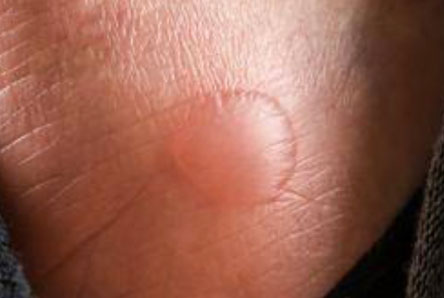
Blisters
Blisters are painful fluid filled lesions produced by friction and pressure. They can be caused by ill-fitting shoes, foot deformities, wrinkled socks, stiff shoes or hot feet. They can be serious if you are a diabetic. Do not pop a blister, keep it covered and make sure your footwear is comfortable and it should heal. If you are concerned see a Podiatrist for advice.
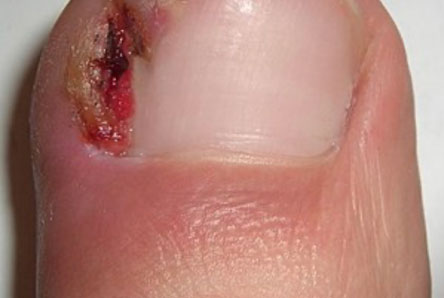
Ingrowing toenail
An ingrowing toenail is where a piece of nail pierced the flesh of the toe. It can be extremely painful and become inflamed and infected. It can be caused by not cutting the nail properly and cutting it too short. You will need to see a Podiatrist, especially if it becomes infected. Sometimes the nail spike can be removed and the toe will heal. In more severe cases all or part of the nail would need to be removed. The Podiatrist would go through the options available
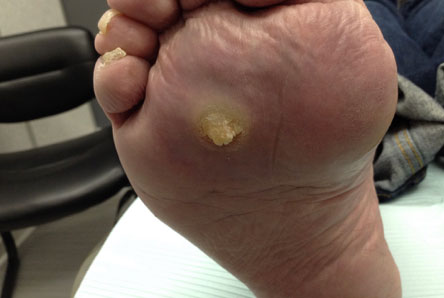
Callus and corns
Callus is an area of hard skin that can form anywhere on the foot where there is a lot of pressure. It can be caused by friction and more commonly by ill-fitting footwear. Sometimes underneath the callus there may be a corn. This is a hard lump and can feel like a stone. This occurs in the area where you get the most amount of pressure. Changing footwear will help to reduce the callus. A podiatrist would be able to remove the corn and callus and advise you on ways to prevent them returning and provide padding.
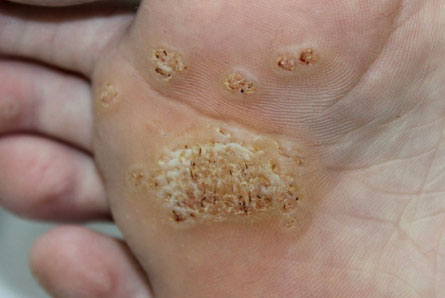
Verrucae
They are caused by a virus infection which is contagious through direct person to person contact. They are most commonly seen in children, teenagers and young adults. The most common appearance is tiny black dots under hard skin. They can go on their own or you they may require treatment if they hurt or start to spread.
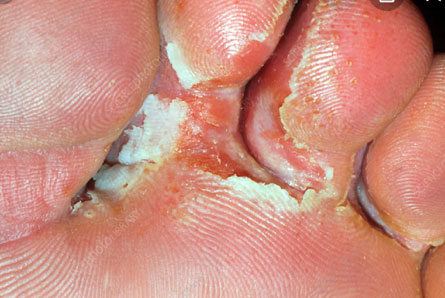
Athlete’s foot
Athlete’s foot is a fungal infection of the skin. It leads to intense itching, redness and peeling of the skin. It is contagious and needs to be treated otherwise it can spread to other toes and the nails. It usually occurs in between the toes and is caused by moisture. It’s important to dry your toes thoroughly. Over the counter treatments are available, but if you are concerned you should see your Podiatrist.

Specialist Advanced Podiatry Treatment

Curacorn
Effective Treatment for Painful Corns
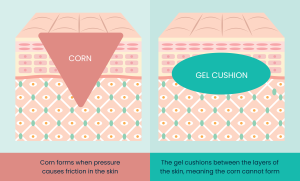
Curacorn® is a unique and innovative treatment using specialised gel injections to cushion ‘inside’ the skin to prevent painful pressure lesions such as corns and calluses, making it the perfect treatment for busy patients who find themselves having to return for regular/frequent treatments.
Should you wish to be assessed for this treatment, you should book a “Standard Podiatry – Skin and Nail” appointment initially so Helen can assess you. It may not necessarily lead to a Curacorn treatment, if the issue can be treated in other ways.
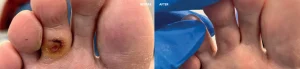
Before and After Shots of the Corn
Benefits of Curacorn
Specialist Advanced Podiatry Treatment
Swift Microwave Verruca Treatment
What is Swift?
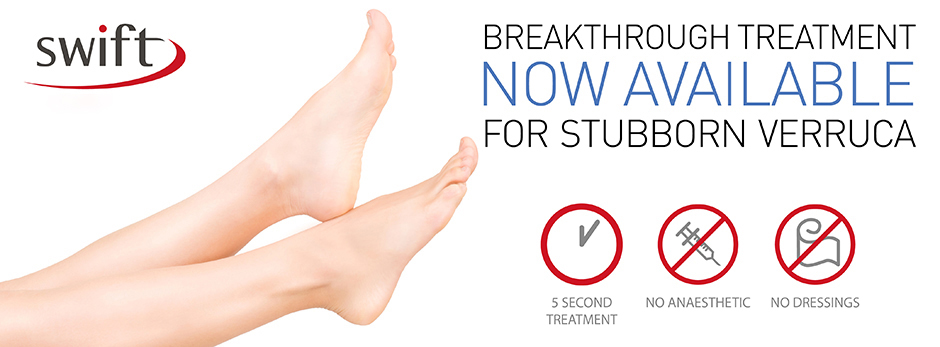
Swift is a new technology, developed in the UK which has been licensed for the general treatment of skin lesions in Podiatry and Dermatology.
Swift uses microwave energy which is delivered through a special probe applied to the skin to treat the affected tissue.
It is a highly effective, non-invasive podiatry treatment for stubborn verrucas and warts, boasting a 74–86% success rate by using microwave energy to trigger an immune response. It is quick, usually requires no anesthetic or dressings, and involves 3-4 sessions to destroy infected tissue from the inside out.
- How it Works: A probe delivers 10 watts of microwave energy to the affected area, generating heat that targets the underlying HPV infection.
- Procedure: A podiatrist typically reduces the skin, then applies the probe 5 times for 2 seconds each to the lesion.
- Effectiveness: It is highly effective for long-standing or stubborn verruca’s, often surpassing standard treatment methods.
- Comfort and Recovery: While it can cause brief discomfort similar to a pin-prick or bee sting, it requires no dressings, allowing for immediate return to normal activities.
- Limitations: It is generally not recommended for patients with pacemakers, metal implants in the foot/ankle, neuropathy, or very poor circulation.
How many treatments will I need?
This is dependent on how you respond to treatment.
In some cases, you may need more than one treatment (these can be from 14 days to over a month apart depending on the response). We typically expect 80% of verrucae to resolve after 3 treatments.
Can anyone have this treatment?
With a few exceptions, most people with skin lesions would be able to have this treatment.
Your Podiatrist Helen will carry out an assessment prior to treatment and be able to advice you on this.
Swift Treatment Progression Images:

Specialist Advanced Podiatry Treatment
Nail Surgery
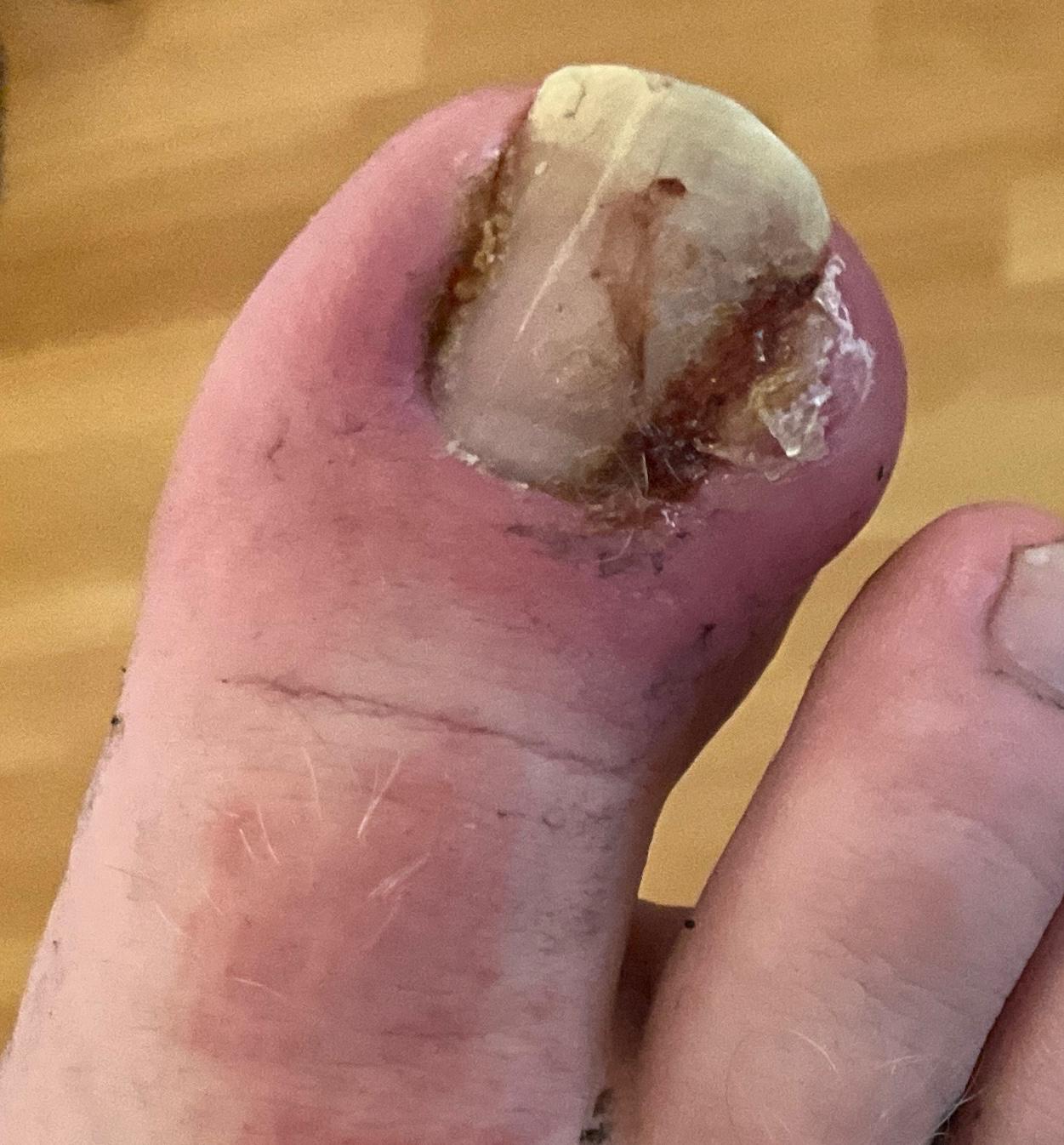
Nail surgery is a minor, routine procedure, performed by our Podiatrist Helen under local anaesthetic, to treat painful, ingrown, or damaged toenails by removing part (partial) or all (total) of the nail. A chemical (phenol) is often applied to prevent the nail from regrowing, providing a permanent solution. The procedure takes about 40 minutes, with a 6-12 week healing time.
- Procedure Types:
- Partial Nail Avulsion (PNA): The most common, removing only the ingrown edge of the nail.
- Total Nail Avulsion (TNA): Complete removal of the nail, usually for severely damaged or thick nails.
- Process: A local anesthetic is injected into the toe, a tourniquet is applied to reduce blood flow, the nail/portion is removed, and phenol is applied to the nail bed.
- Recovery & Aftercare:
- Immediate: The toe will be dressed in a bulky bandage; it is recommended to wear open-toed shoes.
- Activities: You may need to take a day or two off work or school, and you should avoid driving while the toe is numb.
- Care: Keep the dressing dry and clean, and typically change it every other day after the first 48 hours.
- Healing Time: Generally, full healing occurs in 6-8 weeks for partial, and 8-10 weeks for total nail removal.
- Benefits: This procedure is considered a permanent, safe, and effective solution to long-term pain and recurring infections from ingrown or problematic nails.
Preparation and Considerations
- Arrange for transport home, as you may not be able to drive.
- Eat and drink normally before the appointment.
- Inform the practitioner if you have conditions like diabetes or are taking blood-thinning medication, as these may impact healing.
Our clinic podiatrist for skin and nail treatments

Helen Spencer