That first step out of bed can be a surprisingly difficult part of the day when you have plantar heel pain. Many people describe a sharp, bruised or pulling sensation beneath the heel that eases after a few minutes of walking, only to return after prolonged standing, exercise or a busy day on your feet. Shockwave therapy for plantar fasciitis may be considered when this pain is persistent and is not settling with the right initial care.
At Faringdon Wellbeing Clinic, treatment begins with understanding the person behind the symptoms. Your work, sport, footwear, activity levels, medical history and wider movement patterns can all influence heel pain. Shockwave therapy can be a useful part of a treatment plan, but it is not a substitute for a clear assessment or for rehabilitation that supports the foot and lower limb over the longer term.
What is plantar fasciitis?
Plantar fasciitis is a common term for pain at or close to the point where the plantar fascia attaches to the heel bone. The plantar fascia is a strong band of connective tissue running along the sole of the foot. It helps support the arch and transfer force as you walk, run and push off the ground.
The condition is often called plantar fasciitis, although persistent cases may involve changes in the tissue rather than ongoing inflammation alone. This distinction matters because the most suitable treatment is not always simply about reducing inflammation. It is about improving the tissue’s tolerance to load and addressing the factors that may be keeping the pain active.
Heel pain can also come from other sources, including irritation of a nerve, a stress injury, problems involving the heel fat pad, Achilles tendon issues or pain referred from elsewhere in the leg or back. This is why an assessment is valuable before committing to a particular treatment.
How shockwave therapy for plantar fasciitis works
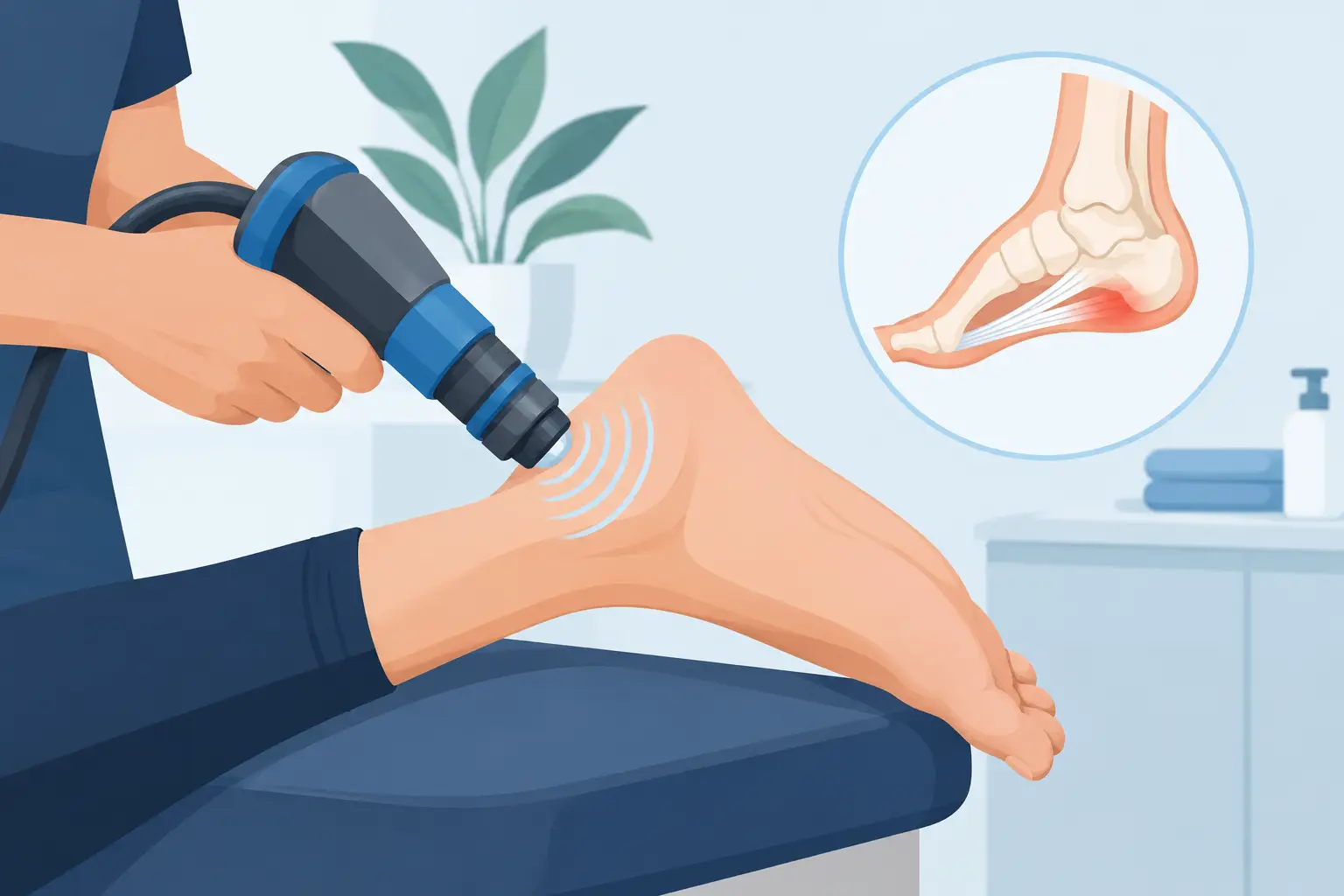
Shockwave therapy, also called extracorporeal shockwave therapy, uses sound waves delivered through a hand-held treatment device. The clinician applies gel to the heel area and moves the device over the relevant tissue. The aim is to stimulate a biological response in painful, slow-to-settle tendon or fascia tissue and support the body’s repair processes.
There are different forms of shockwave treatment, including radial and focused shockwave. The type used, the energy level and the number of sessions should be chosen according to the clinical findings, your symptoms and your tolerance. It is not a one-size-fits-all procedure.
During treatment, you will usually feel repeated tapping or pulsing sensations. It can be uncomfortable, particularly over a sensitive heel, but your clinician can adjust the settings and work with you to keep it manageable. A session itself is relatively short. Some people have temporary soreness or redness afterwards, much like the response to a firm hands-on treatment or a challenging exercise session.
When might it be a good option?
Shockwave therapy is commonly considered for plantar heel pain that has lasted for several months, particularly where sensible first-line measures have not provided enough improvement. These may include changes to activity, supportive footwear, targeted stretching and strengthening, and advice on gradually returning to running, long walks or other aggravating activities.
It may suit someone whose pain is limiting everyday function, such as getting around at work, walking the dog, keeping active with family or returning to sport. It can also be helpful for people who have improved a little but remain stuck at a frustrating plateau.
However, the right timing depends on the individual. If symptoms are recent, a carefully guided programme of load management and rehabilitation may be the best place to start. If pain has persisted despite this approach, shockwave may be discussed as an additional option rather than a stand-alone fix.
A clinician will also check whether shockwave is appropriate for you. Certain health conditions, medications, circulation concerns and other factors can affect treatment decisions. Pregnancy, a history of blood-clotting difficulties and a suspected acute injury are examples of situations where individual clinical advice is needed. Be open about your full medical history, even if it does not appear directly related to your foot.
What results can you realistically expect?
The goal is not simply to make the heel feel better on the day of treatment. The aim is to reduce pain over time and help you return to walking, work, exercise and other activities with greater confidence. Improvement is usually gradual, not immediate. Some people notice a change within a few weeks, while for others progress continues over the following months.
Results vary because plantar heel pain has more than one contributing factor. Body-wide health, training volume, time spent standing, sleep, footwear, calf and foot strength, and previous injury can all influence recovery. A person training for a half marathon will need a different return-to-activity plan from someone whose pain is mainly triggered by long shifts at work.
Research supports shockwave as an option for some people with chronic plantar heel pain, but it does not guarantee success for every patient. A good clinician should explain both the potential benefits and the limitations, then review how you are responding as treatment progresses.
Why rehabilitation still matters
Shockwave treatment works best when it sits within a wider plan. The plantar fascia does not work alone: the toes, intrinsic foot muscles, calf, ankle, knee, hip and overall walking or running pattern all help manage load through the foot.
Your programme may include specific calf and plantar fascia stretches, progressive strengthening, balance work and advice on pacing activity. For some people, taping, heel cups, insoles or footwear changes may provide short-term comfort while strength and tolerance are built. These options should support rehabilitation, rather than become something you feel unable to walk without.
It is also useful to look at the pattern of your week. A sudden increase in steps, a return to court sports, a new job involving more standing or trying to compensate for pain in the other leg can all keep symptoms going. Small, realistic adjustments often make a meaningful difference.
What happens at an assessment?
A podiatry or musculoskeletal assessment should involve more than locating the sore spot. Your clinician will ask when the pain began, what brings it on, whether it is worse first thing in the morning and how it affects your usual life. They may assess foot and ankle movement, calf strength, walking pattern, balance and the way your symptoms respond to different movements or loads.
Where necessary, diagnostic imaging or input from another clinician may be considered. In a multidisciplinary setting, coordinated care can be particularly helpful if your heel pain is linked with wider lower-limb, back or sports-injury concerns.
You should leave with a clear explanation of the likely cause of your pain, whether shockwave is appropriate, what the treatment course may involve and what you can do between appointments. You should also know what would prompt a review of the plan.
Questions people often ask
Will I need to rest completely after shockwave therapy?
Complete rest is rarely the aim. You may be advised to avoid high-impact activity for a short period, depending on your symptoms and the treatment plan, while continuing appropriate everyday movement and prescribed exercises. The balance is to avoid repeatedly aggravating the heel without becoming fearful of using the foot.
Is shockwave therapy painful?
It can be uncomfortable over an already tender area, but it should remain tolerable. Tell your clinician how it feels during the session. Treatment settings can be adapted, and your comfort matters.
How many sessions will I need?
This depends on the type of shockwave used, the duration and severity of your symptoms, and how you respond. Your clinician should discuss the proposed number of sessions and review your progress rather than promising a fixed outcome from the outset.
Persistent heel pain can make even ordinary plans feel uncertain. With a careful assessment, realistic rehabilitation and the right treatment options for you, the focus can return to what matters: moving comfortably and getting back to the activities that make up your day.