A shoulder can become painful surprisingly quickly when a calcium deposit develops within a tendon. Reaching into a cupboard, fastening a seatbelt or simply trying to sleep on one side may become difficult. Calcific tendonitis barbotage treatment is a minimally invasive, ultrasound-guided procedure designed to reduce this source of pain by breaking up and removing calcium from the affected tendon.
Despite the name, clinicians often use the term calcific tendinopathy rather than tendonitis, as inflammation is not always the main issue. The condition most often affects the rotator cuff tendons in the shoulder. A clear assessment matters because shoulder pain can have several causes, and the right treatment depends on the size, position and stage of the calcium deposit, as well as your symptoms and day-to-day needs.
What is calcific tendinopathy?
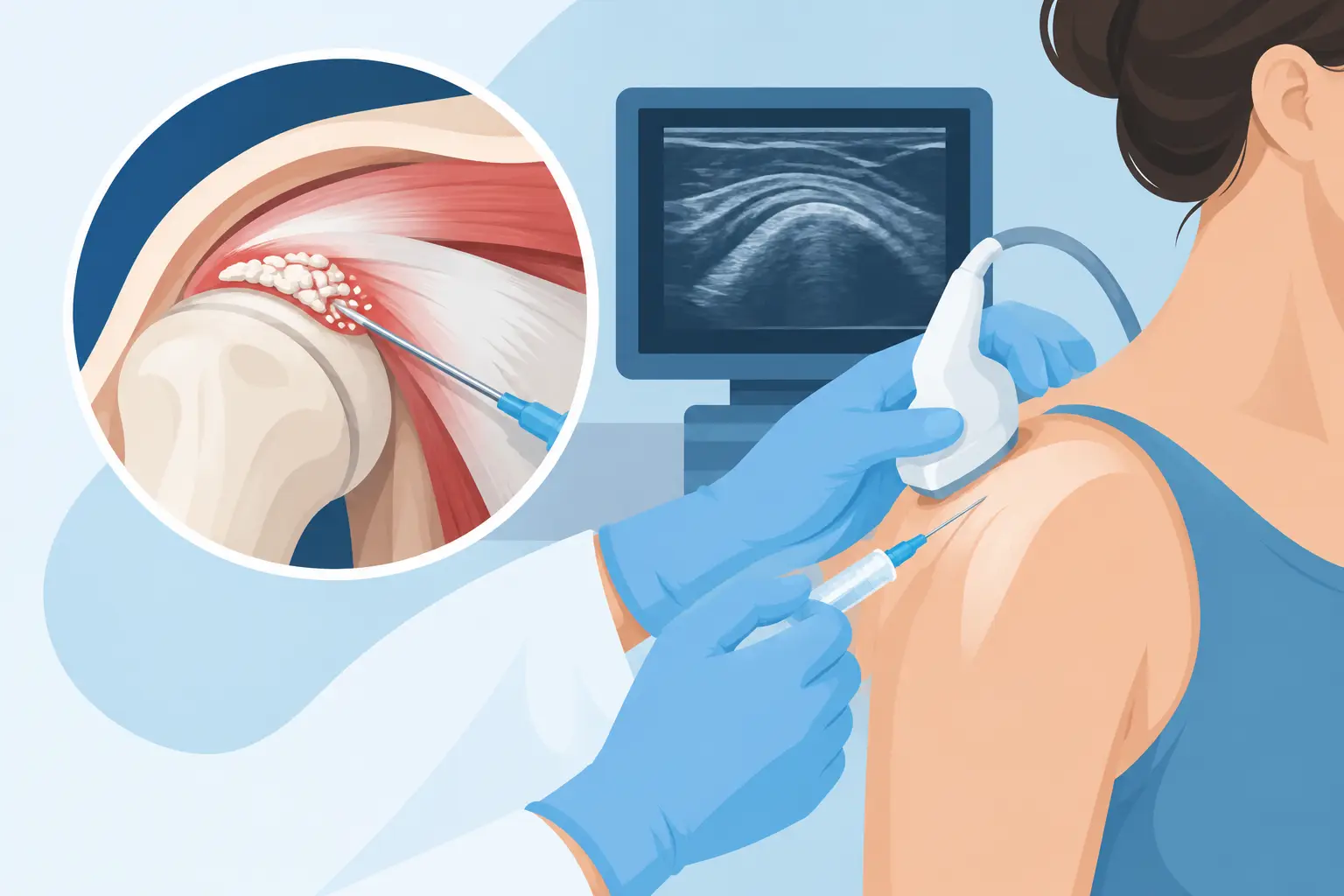
Tendons attach muscle to bone. In calcific tendinopathy, calcium crystals build up within a tendon, most commonly the supraspinatus tendon at the top of the shoulder. Some deposits cause no symptoms and are found incidentally. Others can trigger significant pain, stiffness and loss of movement.
The exact reason calcium develops is not fully understood. It is not usually caused by having too much calcium in your diet, and it is not necessarily the result of a single injury. Changes within the tendon, age-related tissue changes, repetitive loading and reduced blood supply may all play a part. It can affect active people, desk-based workers and those with no obvious shoulder problem beforehand.
Symptoms can fluctuate. Some people notice a gradual ache when lifting the arm, while others experience a sudden, severe flare that disrupts sleep and makes even small movements difficult. A painful phase may occur when the body starts to reabsorb the deposit, creating irritation around the tendon and bursa.
When might barbotage be considered?
Many calcium deposits improve over time with a carefully tailored plan. This may include activity modification, pain relief advised by an appropriate clinician or pharmacist, physiotherapy-led rehabilitation, and in some cases shockwave therapy. However, these approaches do not suit every presentation, particularly where pain remains persistent or the deposit is clearly contributing to restricted function.
Calcific tendonitis barbotage treatment may be considered when imaging confirms a suitable calcium deposit and non-surgical care has not provided enough relief. It is commonly used for deposits that are softer or more paste-like, as these are more likely to be washed out through a needle. Very dense, hard or small deposits may be less straightforward to remove, and barbotage is not always the best first option.
An ultrasound assessment helps guide this decision. It allows the clinician to examine the tendon, identify the deposit, assess surrounding structures and discuss whether the likely benefits outweigh the limitations in your individual case. It can also help rule out or identify related issues, such as bursitis, tendon tearing or joint stiffness.
How calcific tendonitis barbotage treatment works
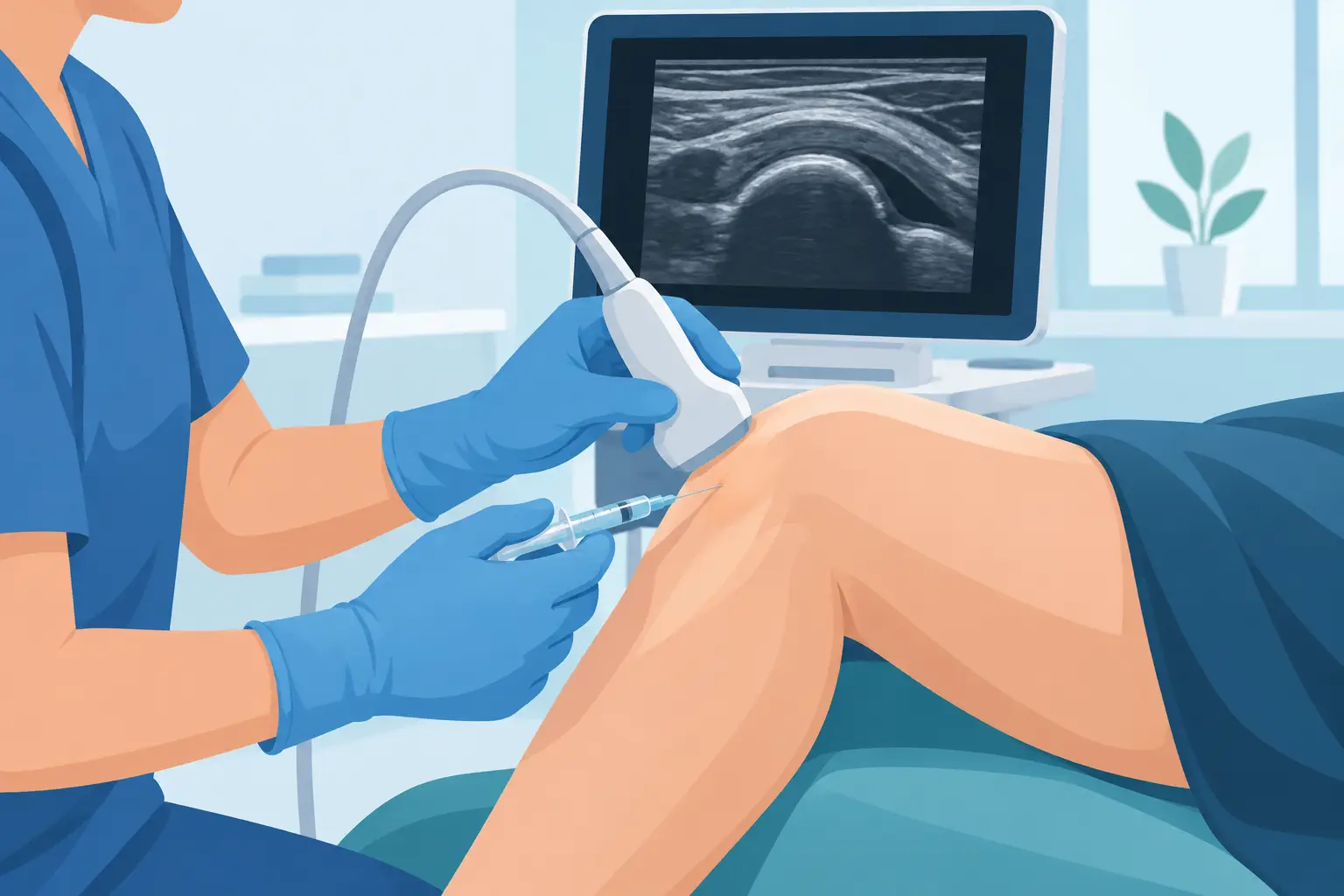
Barbotage is also known as ultrasound-guided needle lavage. The word describes the repeated movement of fluid through a needle to loosen and aspirate calcium from the tendon. Ultrasound is used throughout so the clinician can see the tendon and needle in real time.
The procedure is usually carried out with you comfortably positioned, often sitting or lying down. After the skin has been cleaned, a local anaesthetic is used to numb the area. Under continuous ultrasound guidance, a fine needle is placed into the calcium deposit. Sterile saline and local anaesthetic may then be introduced and withdrawn repeatedly to fragment and draw out the calcium.
Some deposits release readily as a chalky or toothpaste-like material. Others may only partly disperse. The aim is not always to remove every trace of calcium in one session. Reducing the deposit and releasing pressure within the tendon can still help settle symptoms and support recovery.
In suitable cases, an injection may be offered into the bursa around the tendon after lavage to reduce post-procedure inflammation. This should be discussed carefully beforehand, including the potential benefits, alternatives and individual considerations. Your clinician should ensure you understand each part of the proposed treatment before proceeding.
What does recovery involve?
It is normal for the shoulder to feel sore for the first few days after barbotage. This can be related to the procedure itself and to irritation caused as the deposit is disturbed. Your clinician will provide specific aftercare advice based on the treatment performed and your health history.
Most people are advised to take things relatively gently at first, avoiding heavy lifting, repetitive overhead activity and strenuous exercise for a short period. This does not usually mean complete rest. Gentle movement is often helpful, provided it stays within the guidance you have been given.
Rehabilitation is an important part of the process. Once acute soreness settles, a physiotherapy programme can help restore comfortable shoulder movement, improve rotator cuff and shoulder-blade control, and gradually rebuild confidence with work, exercise and everyday tasks. The right pace varies. A keen tennis player returning to serves has different demands from someone who needs to lift a child or work at a computer without discomfort.
Pain relief can be gradual rather than immediate. Some patients notice an improvement within days or weeks, while for others tendon recovery takes longer. Follow-up imaging may be useful where symptoms persist or where the original deposit was substantial.
Benefits, limitations and possible risks
The main benefit of barbotage is that it can directly target a confirmed calcium deposit without open surgery. It is performed with local anaesthetic, usually takes less time to recover from than an operation, and may reduce pain sufficiently to make rehabilitation more productive.
However, no procedure can guarantee a particular outcome. It may not be possible to remove all of the calcium, particularly if it is hard or poorly positioned. Symptoms can continue if there are other contributors to shoulder pain, such as a tear, frozen shoulder, neck-related symptoms or ongoing overload. Some people may still need further treatment, and a small number may ultimately be referred for a surgical opinion.
As with any injection-based procedure, there are potential risks. These include temporary increased pain, bruising, bleeding, infection, skin changes and an incomplete response. Reactions to local anaesthetic or other medication are uncommon but possible. There is also a small risk of injury to nearby structures, although real-time ultrasound guidance is used to improve accuracy and safety.
Your clinician will ask about medications, allergies, previous reactions to injections, diabetes, bleeding conditions and any signs of infection or illness. This information helps determine whether treatment is appropriate and whether any extra precautions are needed.
Choosing the right support for your shoulder
A calcium deposit on a scan is only one part of the picture. The most useful plan considers your pain pattern, movement, work, sport, sleep, general health and personal goals. Someone with mild discomfort and good function may prefer monitoring and rehabilitation. Someone losing sleep and unable to use their arm despite conservative care may reasonably want to explore an ultrasound-guided procedure.
At Faringdon Wellbeing Clinic, an integrated approach can combine interventional musculoskeletal assessment with rehabilitation support, so treatment decisions do not stop at the procedure itself. Your options can be explained clearly, with space to ask questions and choose a plan that feels appropriate for you.
If shoulder pain is stopping you from moving normally, a focused assessment can provide reassurance as well as direction. Understanding what is happening in the tendon is often the first practical step towards sleeping more comfortably, moving with confidence and returning to the activities that matter to you.