A scar may look as though it has healed on the surface while still feeling tight, sore, numb or unexpectedly sensitive underneath. Scar therapy after surgery is designed to assess how your scar is affecting comfort, movement and confidence, then provide individually tailored support as your body continues to recover.
Surgical scars are a normal part of healing, and every scar develops differently. Some settle with time and need no specific treatment. Others can adhere to surrounding tissues, become hypersensitive, feel restricted during movement or contribute to discomfort in another part of the body. A careful assessment can help establish whether scar therapy may be useful for you.
What happens beneath a surgical scar?
When the body repairs an incision, it creates collagen fibres to close and strengthen the area. In the early stages, this tissue is often firmer and less flexible than the skin and tissue around it. As healing progresses, the scar remodels gradually, sometimes over many months.
If the scar tissue does not glide easily over the tissues beneath it, you may notice pulling when you stretch, twist, walk or reach. This can be particularly noticeable after abdominal, breast, joint, orthopaedic, Caesarean, keyhole or other procedures involving areas that need to move regularly.
A scar can also affect sensation. Some people experience numbness around an incision, while others find clothes, touch or pressure uncomfortable. These changes do not necessarily mean anything is wrong, but they can affect everyday activities, exercise, sleep and body confidence.
When can scar therapy after surgery begin?
The right time depends on the type of operation, how the wound is healing and the advice of your surgical team. Scar therapy should not begin over an open wound, active infection, unexplained bleeding or an area that has not been cleared for touch or movement.
Once the incision is fully closed, dry and medically stable, gentle work may be appropriate. Your practitioner will take account of the age and appearance of the scar, your operation and any relevant health conditions. Early treatment is not always better, and forceful treatment is not the aim. The priority is to work safely and comfortably with the stage of healing you are in.
If you have had surgery recently, it is sensible to follow your surgeon’s aftercare guidance first. Scar therapy can sit alongside that advice, rather than replacing it.
How scar therapy may help
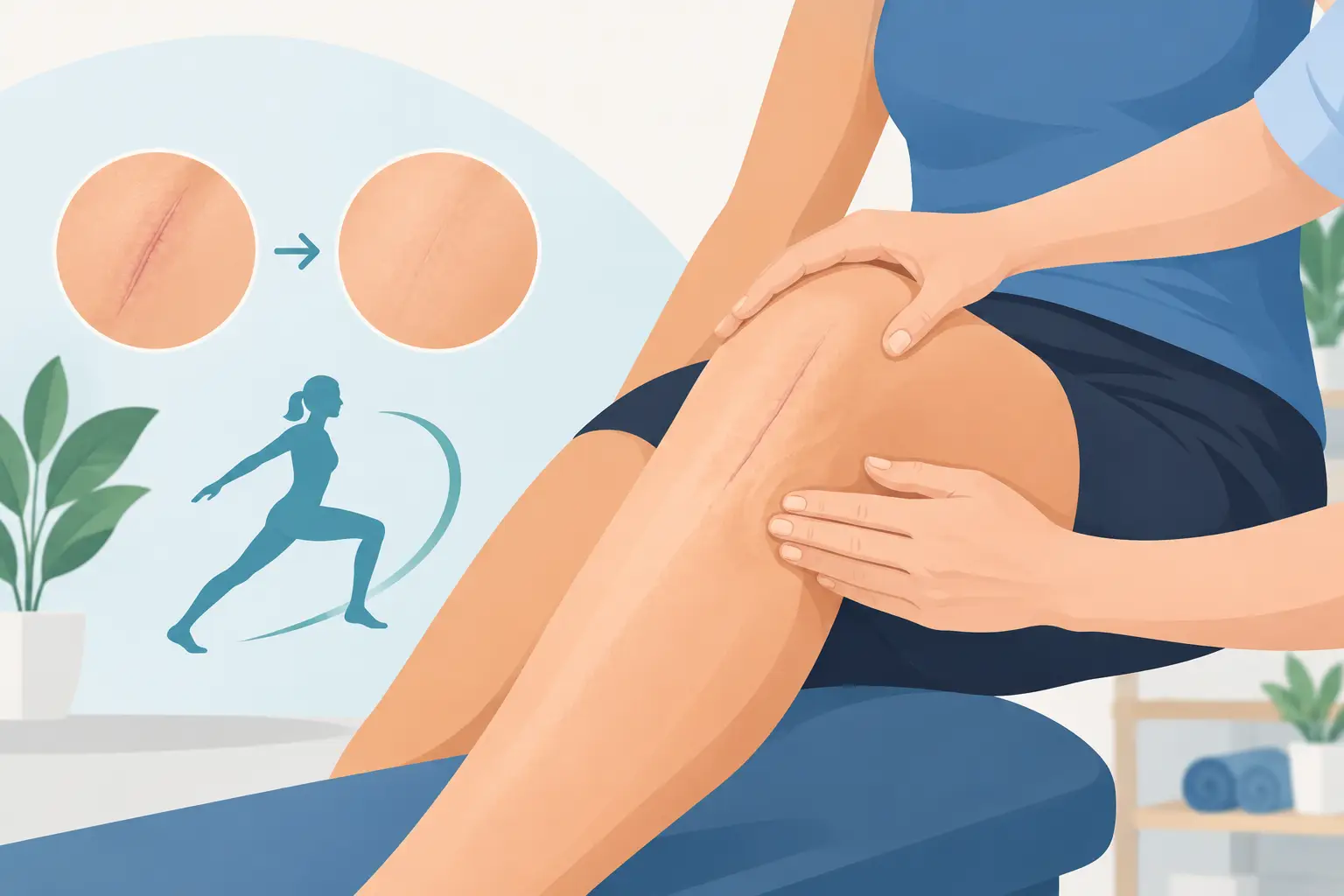
Scar therapy is a hands-on treatment approach that focuses on the scar and the surrounding tissues. It may include gentle manual techniques, guided movement, education on home care and desensitisation work where touch feels difficult. Treatment is adjusted to your symptoms and tolerance, not simply to how the scar appears.
The purpose may be to improve tissue mobility, reduce a feeling of tightness, support comfortable movement and help you become more at ease with touching or moving the area. For someone recovering from abdominal surgery, this might mean feeling less pulling when standing upright or turning in bed. Following a knee operation, it may support the movement work already being completed in rehabilitation.
It is worth being realistic about expectations. Scar therapy cannot erase a scar or guarantee a particular cosmetic result. Its value is often functional: helping the scar and nearby tissues move more comfortably, while supporting your return to the activities that matter to you.
Gentle treatment, not painful treatment
People sometimes assume that scar work needs to be intense to be effective. It does not. A skilled practitioner uses appropriate pressure and listens closely to your feedback. Mild tenderness can occur, particularly when tissue is sensitive, but treatment should not leave you feeling bruised, overwhelmed or significantly more painful.
A session may also include breathing and relaxation strategies. It is common to protect an area that has been painful or involved surgery. Over time, that guarding can change how you stand, move and use nearby muscles. Restoring a sense of safety and control is an important part of care.
What to expect at your appointment
Your first appointment starts with a conversation. Your practitioner will ask about your surgery, recovery, current symptoms, medical history, activity goals and any guidance you have received from your consultant or surgical team. They will assess the scar only with your consent and will explain what they are looking for throughout.
They may consider the scar’s colour, temperature, sensitivity, thickness and mobility, as well as how nearby joints and muscles are moving. A scar on the abdomen, for example, may be assessed alongside posture, breathing and trunk movement. This wider view matters because a local restriction can sometimes influence the way the rest of the body compensates.
Treatment plans vary. Some people benefit from a small number of sessions and a straightforward home programme. Others, particularly after more extensive surgery or where movement has been affected for some time, may need longer-term support. Your plan should be reviewed as symptoms and goals change.
At Faringdon Wellbeing Clinic, scar therapy can also be coordinated with physiotherapy, osteopathy, massage or movement-based rehabilitation where appropriate. This can be helpful when a scar restriction sits alongside pain, reduced strength, altered posture or a gradual return to sport, work or day-to-day activity.
Caring for a scar between sessions
Your practitioner may show you simple techniques to use at home once it is safe to do so. Consistency is generally more useful than doing too much at once. The correct approach depends on the scar, your skin and the stage of recovery.
For some people, this may involve gentle contact around the scar, gradually increasing tolerance to different textures, or movement exercises that encourage the area to glide comfortably. Silicone products, moisturisers, tape or compression may be recommended in some circumstances, but these should be chosen with suitable clinical guidance, particularly if you have sensitive skin, a history of poor wound healing or specific post-operative instructions.
Protecting a new scar from sun exposure is also sensible, as ultraviolet light can make it darker for longer. Your practitioner can discuss practical options based on where the scar is located and the season.
When to seek medical advice first
Scar therapy is not a substitute for medical review when a wound may not be healing as expected. Contact your GP, surgeon, NHS 111 or your surgical team promptly if you notice increasing redness, warmth, swelling, discharge, a bad smell, fever, wound opening, rapidly worsening pain or a sudden change in the area.
You should also seek advice if a scar becomes raised, very itchy, increasingly painful or starts to limit movement significantly. Some scars, including hypertrophic and keloid scars, may need medical assessment and a different treatment plan. A practitioner can work within a wider care plan, but diagnosis and management of concerning changes should come from the appropriate medical professional.
Choosing support that fits your recovery
The best scar therapy is not a fixed set of techniques. It is a considered approach that respects your surgery, your healing timeline and what you need to get back to. You may want to walk without pulling, wear certain clothing comfortably, return to the gym, lift a child, play sport or simply feel less aware of the scar every day.
You do not have to wait until discomfort becomes a major limitation to ask for advice. A professional assessment can offer reassurance, practical strategies and a clearer sense of whether treatment is likely to help. Recovery is rarely linear, and small improvements in comfort and movement can make everyday life feel more like your own again.