When conversations become harder to follow, the television volume keeps creeping up, or a family member starts repeating themselves, it can be tempting to put it down to a busy room or tiredness. A hearing test Faringdon appointment provides a clear, professional way to understand what is happening and what support may help.
Hearing changes are common at every stage of life. They can develop gradually, follow a period of illness or noise exposure, or be linked to something straightforward such as a build-up of ear wax. A proper assessment replaces guesswork with useful information, giving you the confidence to make choices that suit your hearing, lifestyle and priorities.
When to arrange a hearing test in Faringdon
Many people wait until hearing difficulty is affecting work, relationships or confidence before seeking help. There is no need to wait for it to reach that point. Booking an assessment can be helpful if you notice that speech sounds unclear, particularly in cafés, meetings or family gatherings, or if you regularly ask people to repeat themselves.
Other signs include turning the television up louder than others prefer, struggling to hear on the telephone, finding certain voices difficult to follow, or feeling that sounds are muffled in one or both ears. Some people notice ringing, buzzing or hissing in the ears, known as tinnitus. Others are more concerned about a blocked sensation, ear discomfort or recurring wax build-up.
Hearing and balance are also closely connected for some people. If dizziness, unsteadiness or a feeling of being off-balance is part of the picture, it is worth mentioning this when you book. Understanding the wider symptoms helps your clinician decide whether a hearing assessment, ear examination or a more joined-up plan for balance rehabilitation is appropriate.
Hearing loss is not always obvious
Gradual hearing changes are easy to accommodate without realising it. You may choose a quieter table in a restaurant, avoid group conversations, rely more on lip-reading, or stop joining in because following the discussion feels tiring. These adjustments can work for a while, but they can also make everyday life feel smaller.
A hearing test does not presume that you need a particular treatment or device. Its purpose is to establish your starting point. For some people, reassurance and monitoring are enough. For others, treating wax, protecting hearing in noisy environments, considering hearing technology or seeking further medical advice may be the sensible next step.
What happens during a hearing assessment?
A good appointment should feel unhurried and easy to understand. It usually begins with a conversation about your hearing, general health, work, hobbies and the situations that are most challenging. This matters because hearing needs differ. A musician, a teacher, someone working in open-plan offices and a person who mainly wants to hear grandchildren clearly may all need different advice.
Your ears may then be examined to check the ear canal and eardrum as appropriate. Wax is a common reason for reduced or muffled hearing, but it is not the answer in every case. Looking in the ear before making assumptions is an important part of safe, individualised care.
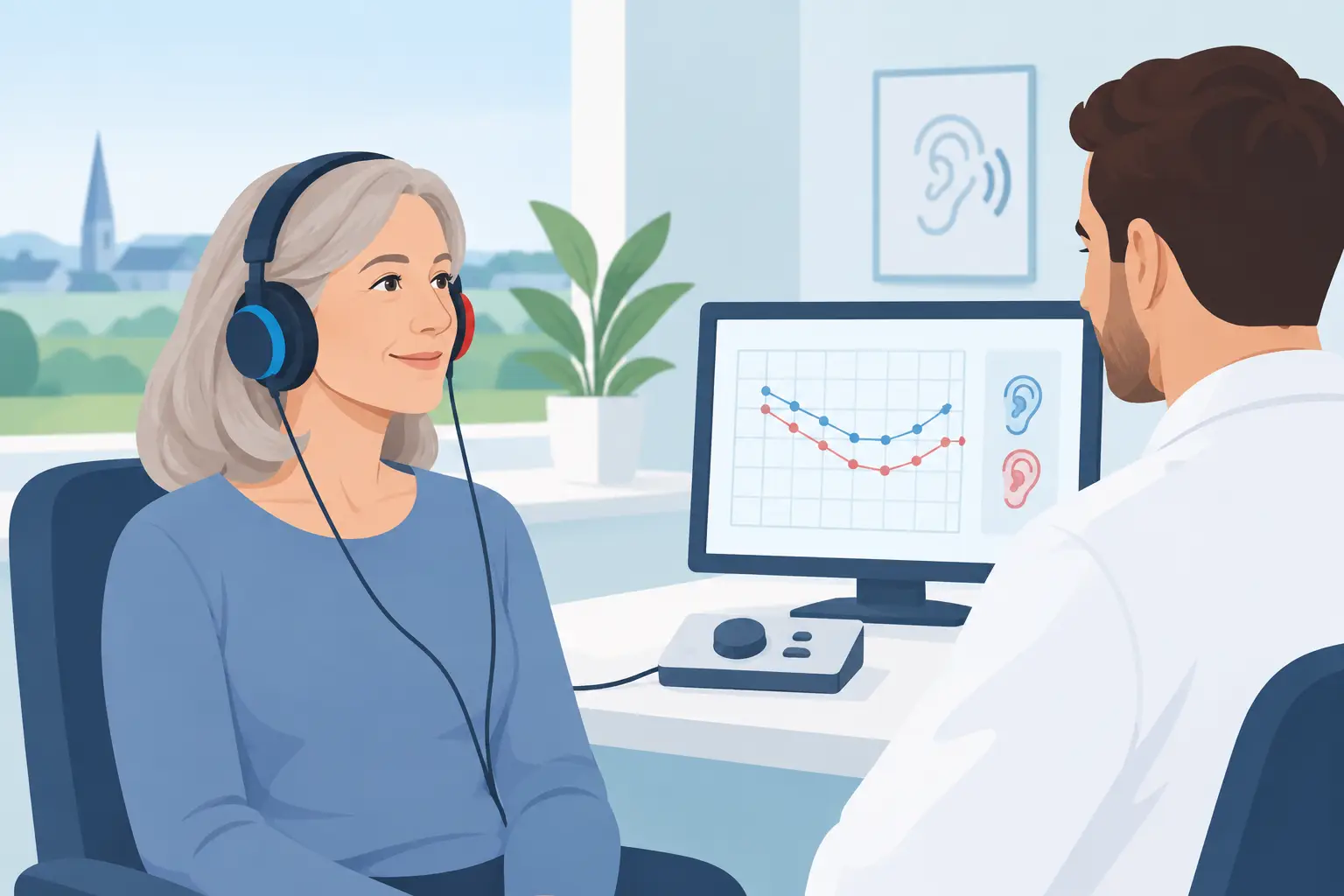
The hearing test itself commonly involves listening to carefully controlled sounds through headphones and responding when you hear them. You may also be asked to listen to speech at different volumes or with background noise. These measures help identify the quietest sounds you can hear across a range of pitches and how well you understand speech.
Results are usually shown on an audiogram, a chart that maps hearing levels. The chart may look technical at first, but your clinician should explain it in plain language: what it indicates, whether one ear differs from the other, and what it could mean in the places where you notice difficulty.
Why an ear health check matters
It is understandable to assume that a blocked ear is simply wax. Sometimes it is. However, changes in hearing can have several causes, and an ear examination helps distinguish between a clear, manageable wax issue and symptoms that need a different pathway.
Where wax removal is suitable, microsuction is a precise technique used to remove wax under direct visual guidance. It is not appropriate for every ear or every medical history, which is why assessment comes first. If wax is not the cause of the problem, removing it will not improve hearing, and a full test can help point to the next sensible action.
Do not try to clear ear wax with cotton buds, hair grips or ear candles. These can push wax further down the canal, irritate the skin or cause injury. If your ears feel blocked, seek professional advice rather than attempting to remove anything yourself.
Understanding your options after the test
The value of a hearing assessment lies in the conversation that follows. You should leave knowing what the findings mean, not simply with a graph or a technical label. Depending on your results, the recommendation may be to monitor your hearing over time, address wax, use custom-fit earplugs for regular noise exposure, explore hearing support, or speak with your GP or another specialist.
There is no one-size-fits-all answer. A mild change that causes little day-to-day difficulty may only need observation and practical communication strategies. On the other hand, even a modest hearing loss can be significant for someone whose job depends on clear communication, or for a person who has begun avoiding social situations.
Custom-fit earplugs can be useful for musicians, motorsport participants, people using loud tools, and anyone regularly exposed to noisy environments. The aim is not to block out the world completely, but to reduce harmful sound exposure while keeping communication as clear as possible. The right option depends on the setting and the level of protection needed.
At Faringdon Wellbeing Clinic, hearing concerns can be considered as part of the wider picture. If reduced hearing is affecting confidence outdoors, contributing to communication strain or occurring alongside balance concerns, care can be coordinated with the relevant members of the clinic team where appropriate.
When you should seek urgent advice
Most hearing changes can be assessed through a planned appointment, but a sudden loss of hearing, especially in one ear, needs urgent medical attention. The same is true for severe ear pain, discharge or bleeding from the ear, sudden dizziness with new hearing changes, or hearing loss following a head injury.
Do not wait to see if sudden symptoms settle. Contact NHS 111, your GP, an urgent treatment service or emergency services as appropriate. A private hearing appointment is valuable for assessment and ongoing support, but acute symptoms may need prompt medical investigation.
Getting the most from your appointment
Before your visit, think about the moments where hearing feels most difficult. Is it background noise, the telephone, the car, meetings or television? Have symptoms come on slowly or suddenly? Do you have tinnitus, dizziness, pressure, pain or a history of ear infections? Bringing this information helps make the assessment more relevant to you.
It can also help to bring a partner, friend or family member if you would value another perspective. They may have noticed changes that you have adapted to, and they can help you remember the discussion afterwards. The appointment should still centre on your goals and your choices.
Hearing well is about more than detecting sound. It supports connection, confidence, safety and enjoyment in ordinary moments, from chatting over tea to hearing instructions at work. If something has changed, a timely assessment can give you clarity and a practical way forward.