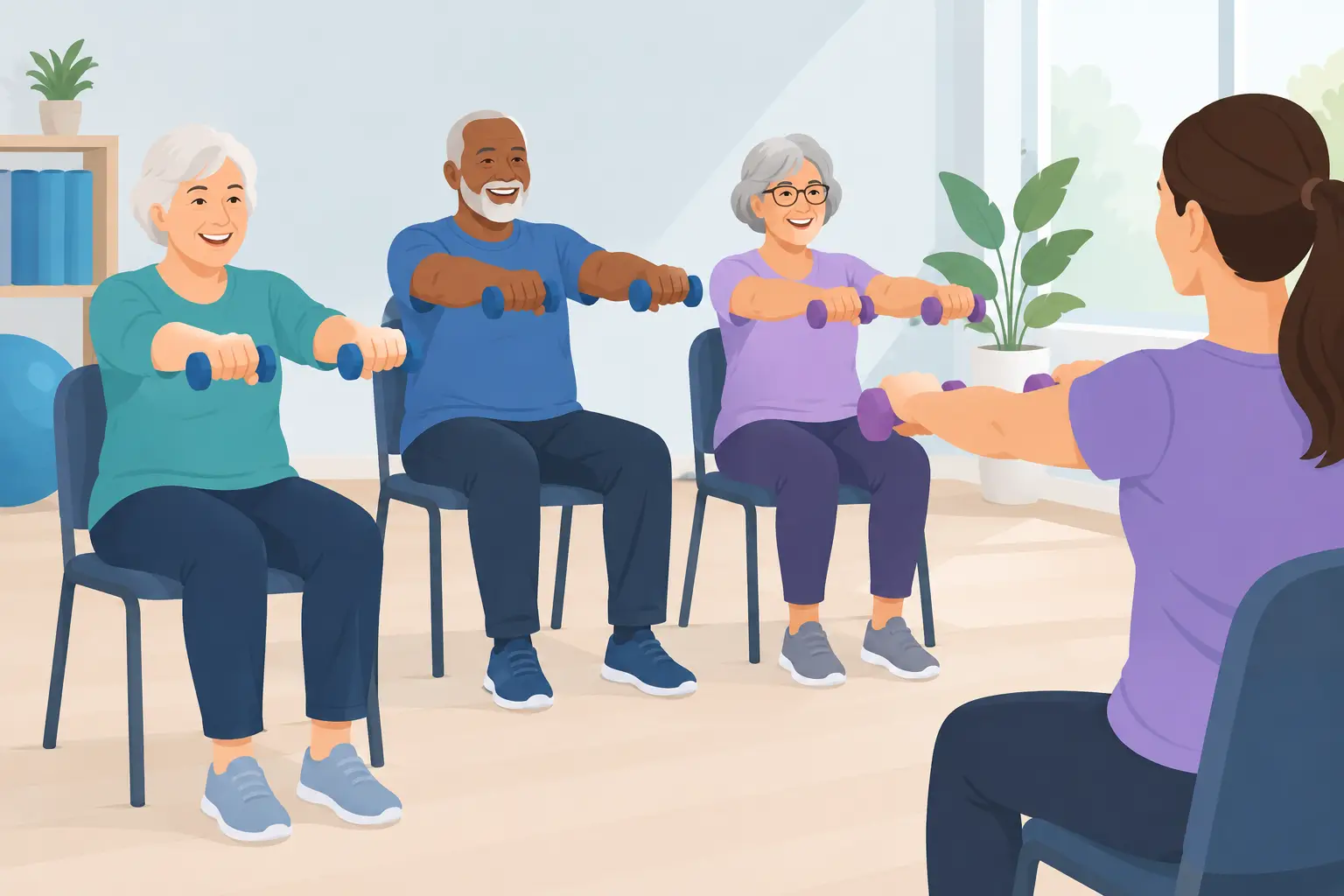
A chair can be a starting point for better movement, not a limit. For people who feel unsteady on their feet, are returning to activity after illness or injury, or simply want to keep moving with confidence, seated exercise classes for seniors offer a practical and supportive way to exercise.
The right class is not about pushing through discomfort or trying to match somebody else’s pace. It is about improving the movements that matter in daily life: getting up from a chair, reaching into a cupboard, turning safely, walking with more confidence and maintaining the strength to stay independent.
What seated exercise classes for seniors involve
Seated exercise uses a stable chair as support while you work through controlled movements for strength, flexibility, posture, coordination and circulation. Exercises may involve the arms, shoulders, spine, hips, knees, ankles and feet. Depending on the class, there may also be gentle standing options for those who are ready for them.
A well-led session is adaptable. One person may perform a movement with both feet firmly on the floor, while another uses a lighter resistance band or a smaller range of motion. The aim is not to make every exercise look identical. It is to help each person move safely and effectively at a level that feels manageable.
This matters because ageing is not one experience. Some people are managing arthritis, longstanding back pain or reduced balance. Others may be active walkers who want an enjoyable way to maintain strength and mobility. A qualified instructor should be able to offer clear alternatives without making anyone feel singled out.
Why chair-based movement can make a real difference
Regular movement helps support muscle strength, joint mobility and physical confidence. When activity feels safe and achievable, it can also be easier to maintain as part of a weekly routine. For many older adults, that consistency is more valuable than an intense session completed once and then avoided.
Strength for everyday tasks
Age-related changes in muscle strength can make ordinary activities feel harder over time. Controlled seated exercises for the legs, arms and trunk can support the muscles used for standing, carrying, climbing stairs and maintaining an upright posture.
A chair-based class can be particularly useful for people who are not yet comfortable exercising on the floor, who find high-impact activity uncomfortable, or who need a more gradual return to movement. Resistance bands, light hand weights or simple bodyweight movements may be used, but only when appropriate for the individual and the session.
Balance begins before you stand up
Balance is not only about standing on one leg. It also relies on posture, leg strength, ankle movement, reaction time and the ability to shift weight with control. Seated work can help develop several of these foundations in a lower-risk setting.
That said, if falls, dizziness or a marked loss of confidence are a concern, a general exercise class may not be enough on its own. A personalised assessment can identify whether vestibular issues, medication effects, pain, reduced sensation in the feet or another factor may be contributing. The best next step depends on the cause.
Movement without unnecessary strain
For people with painful knees, hips or feet, seated exercise can reduce the loading that makes certain activities difficult. This does not mean avoiding weight-bearing movement forever. Where suitable, gradual standing and walking exercises can remain valuable parts of rehabilitation and healthy ageing. A seated class is simply a useful place to begin, or a sensible option on lower-energy days.
The trade-off is that chair-based exercise cannot fully replace all forms of weight-bearing activity for everyone. If your goal is to improve walking tolerance, stair confidence or bone health, a programme may need to include carefully selected standing exercise too. This should be introduced at a pace that respects your symptoms, ability and goals.
What a good class should feel like
A supportive class should feel organised, calm and encouraging. Instructions need to be easy to follow, with enough time to adjust your position and ask questions. You should never feel pressured to continue an exercise that causes sharp pain, unusual breathlessness, dizziness or a sense that something is not right.
There is a difference between the mild effort of working a muscle and pain that signals the need to stop. You may notice stiffness at the beginning of a session, particularly if you have arthritis or have been sitting for a long period. Gentle movement may ease this, but symptoms that worsen significantly during or after class deserve attention.
Look for sessions led by appropriately qualified professionals who understand movement modification and can recognise when someone may benefit from individual support. At Faringdon Wellbeing Clinic, group exercise for older adults sits alongside physiotherapy, osteopathy, podiatry and balance rehabilitation, allowing movement support to be considered in the context of the whole person.
Before your first class
Choose comfortable clothing that lets you move freely and supportive footwear with a secure sole. Bring water, and arrive a little early if you would like to discuss any relevant health concerns with the instructor.
It is sensible to seek individual advice before starting if you have recently had surgery, a new injury, unstable heart or respiratory symptoms, unexplained dizziness, a recent fall, severe joint pain or a condition that substantially affects your movement. This is not about excluding people from exercise. It is about making sure the starting point is appropriate and that the class supports, rather than aggravates, your needs.
If you use a walking aid, hearing aid or orthotic insoles, continue to use the equipment that helps you feel secure unless a clinician has advised otherwise. Hearing instructions clearly is part of staying safe, so let the instructor know if you need them to face you when speaking or repeat key points.
How often should you attend?
For most people, one class a week is a realistic and useful place to start. The benefits tend to build when class attendance is combined with small amounts of movement on other days, such as a short walk, gentle home exercises or regularly standing up and changing position.
More is not always better at the beginning. If you have been inactive, are recovering from illness or experience fatigue, allow time to see how your body responds over the following day. Mild muscle tiredness can be normal when beginning a new activity. Increasing pain, prolonged exhaustion or loss of confidence means the programme may need to be adjusted.
Progress does not have to mean heavier weights or faster movements. It may mean sitting taller, moving with less hesitation, needing fewer rests, reaching further or noticing that getting out of a favourite chair feels easier. These changes are meaningful because they connect directly to everyday independence.
The social side matters too
Exercise classes can offer something that home programmes often cannot: routine, encouragement and the company of people working towards similar goals. For someone who has become less active after pain, bereavement, illness or a fall, simply returning to a regular group can be an important step towards feeling more connected and capable.
There is no need to be naturally sporty or to have exercised throughout your life. A good seated class meets you where you are, gives you choices and helps you build from there. The most helpful session is often the one you feel comfortable returning to next week – with a little more ease, a little more strength and growing confidence in what your body can still do.