
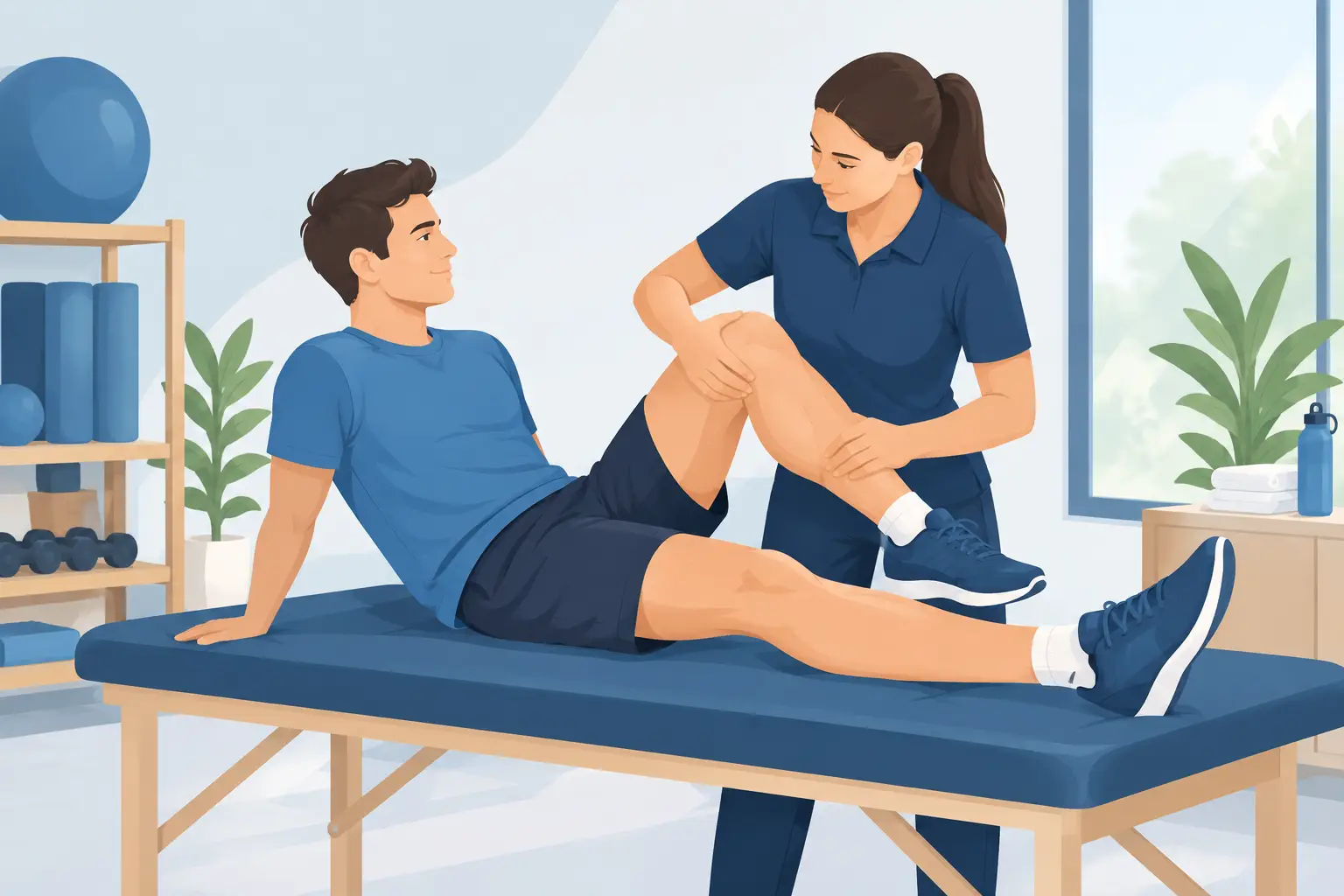
A pulled hamstring before a match, a painful shoulder after swimming, or a knee that swells after a run can quickly change how you move and how confident you feel. Physiotherapy for sports injuries is not simply about treating the painful area. It is a structured process of understanding why the injury happened, settling symptoms where appropriate, and rebuilding the strength, control and confidence needed for your chosen activity.
Whether you play competitive sport, attend a weekly class, run for enjoyment or are returning to exercise after time away, the right rehabilitation plan should reflect your goals. For some people, that means getting back to a 5k. For others, it means being able to lift, turn, jump or keep up with family life without worrying about the next flare-up.
Why sports injuries need more than rest
Rest can be useful in the first few days after an injury, particularly if pain, swelling or loss of movement are significant. However, complete rest for too long can leave muscles weaker, joints stiffer and tissues less prepared for the demands that caused the problem in the first place.
Many sports injuries occur when the load placed on the body exceeds what it can currently tolerate. That may follow a sudden change in training volume, a faster pace, a return after illness, poor recovery, unsuitable footwear or a slip, collision or awkward landing. Sometimes there is one clear incident. At other times, symptoms build gradually, such as Achilles tendon pain, shin pain, runner’s knee or a shoulder that becomes increasingly sore during overhead activity.
A physiotherapist looks beyond the label of the injury. They will consider your training routine, previous injuries, sleep, work demands, movement habits and the specific actions that trigger symptoms. This helps create a plan that is relevant to you, rather than a generic set of exercises found online.
What happens at a physiotherapy assessment?
Your first appointment should give you space to explain what has happened, what you are currently unable to do and what you want to return to. Your physiotherapist will ask about the onset of symptoms, changes in training, medical history and any previous treatment.
They will then assess movement, joint range, muscle strength, balance, coordination and how your body manages tasks related to your sport. This might include squatting, stepping, hopping, reaching, running drills or sport-specific movements, depending on your symptoms and stage of recovery. Assessment is not a test you can fail. It is a practical way to identify what is currently limiting you and where rehabilitation should begin.
If your symptoms suggest that further investigation or another clinical opinion is needed, your physiotherapist can explain why. Persistent night pain, a significant deformity, inability to bear weight after an acute injury, worsening numbness or tingling, or a hot and swollen joint should be assessed promptly. Rehabilitation is most effective when serious injury and medical causes have been appropriately considered.
Physiotherapy for sports injuries: what treatment may include
Treatment is individually tailored and often changes as you progress. In the early stage, the focus may be on reducing pain, restoring comfortable movement and helping you stay as active as safely possible. Hands-on treatment, advice on modifying activity and carefully selected exercises may all have a role, but no single technique is a substitute for progressive rehabilitation.
As symptoms settle, exercise usually becomes more specific. A calf strain may require gradual loading of the calf muscles and controlled running progressions. A knee injury may need work on quadriceps strength, hip control, balance and landing technique. For a shoulder problem, rehabilitation may focus on strength and control around the shoulder blade and rotator cuff, alongside the demands of throwing, serving or lifting.
Your programme should be challenging enough to create change without repeatedly aggravating the injury. Some discomfort during rehabilitation can be normal, particularly with tendon or muscle loading. Sharp pain, swelling that increases after activity, instability or symptoms that take several days to settle are useful signals to discuss with your clinician. The aim is not to avoid every sensation, but to find the right level of load for your current capacity.
Returning to sport is a progression, not a date
A common question is, “When can I play again?” The honest answer depends on the injury, the sport, your previous level of fitness and how your body responds to rehabilitation. Timeframes can be helpful, but they do not tell the full story.
Being able to walk without pain is very different from being ready to sprint, change direction, tackle, jump repeatedly or complete a long training session. A safe return usually involves stages: returning to everyday movement, building strength and endurance, practising controlled sport-specific drills, then gradually reintroducing training and competition.
For some injuries, objective measures can help guide the decision. These may include strength testing, hop tests, balance measures, range of movement and observation of running or landing mechanics. Just as importantly, your confidence matters. If you are physically capable but hesitant to load a recovering ankle or knee, a graded return can help you trust the movement again.
It is also worth being realistic about the difference between returning to participation and returning to performance. You may be ready for a modified training session before you are ready to play a full match at your usual intensity. That is not a setback. It is sensible load management that can reduce the risk of re-injury.
Common injuries physiotherapy can support
Physiotherapy can help with a wide range of acute and overuse problems, including muscle strains, ankle sprains, ligament injuries, knee pain, shoulder pain, tennis or golfer’s elbow, Achilles and patellar tendon pain, plantar heel pain, shin pain and hip or groin symptoms.
The same symptom can have different causes in different people. For example, knee pain in a runner may relate to a sudden increase in mileage, reduced hip or calf capacity, running mechanics, recovery habits or a combination of factors. A good plan does not assume that one body part is always to blame. It identifies the contributors that are most relevant and practical to address.
Where appropriate, physiotherapy can also sit within a broader care plan. At Faringdon Wellbeing Clinic, an integrated team approach can be useful when an injury involves foot mechanics, persistent pain, the need for diagnostic imaging, massage support or specialist treatment options. Your care should remain coordinated and centred on clear rehabilitation goals.
How to get more from your rehabilitation
Consistency matters more than doing everything perfectly. Your physiotherapist should give you a manageable programme that fits around work, family and training. If an exercise is painful, impractical or difficult to fit into your week, say so. The plan can be adapted.
Keep a simple note of symptoms, exercise loads and training sessions, especially when returning to running or field sports. This can reveal patterns that are easy to miss, such as pain after back-to-back sessions or poor recovery after a busy week at work. Small, planned increases are usually more helpful than trying to make up for missed training in one session.
Nutrition, sleep and stress also influence recovery. They are not a replacement for a sound rehabilitation programme, but they affect how well your body adapts to it. If you are training hard while sleeping poorly, under-fuelling or managing a physically demanding job, your physiotherapist can help you make realistic adjustments.
The goal is confident movement
The best outcome is not merely being pain-free in the clinic. It is being able to move with confidence in the situations that matter to you: accelerating for a ball, carrying equipment, completing a hill walk, returning to the gym or enjoying exercise without constantly monitoring every sensation. With a clear assessment, progressive rehabilitation and the right support at each stage, your recovery can become an opportunity to build a stronger foundation for the sport and life you enjoy.


