
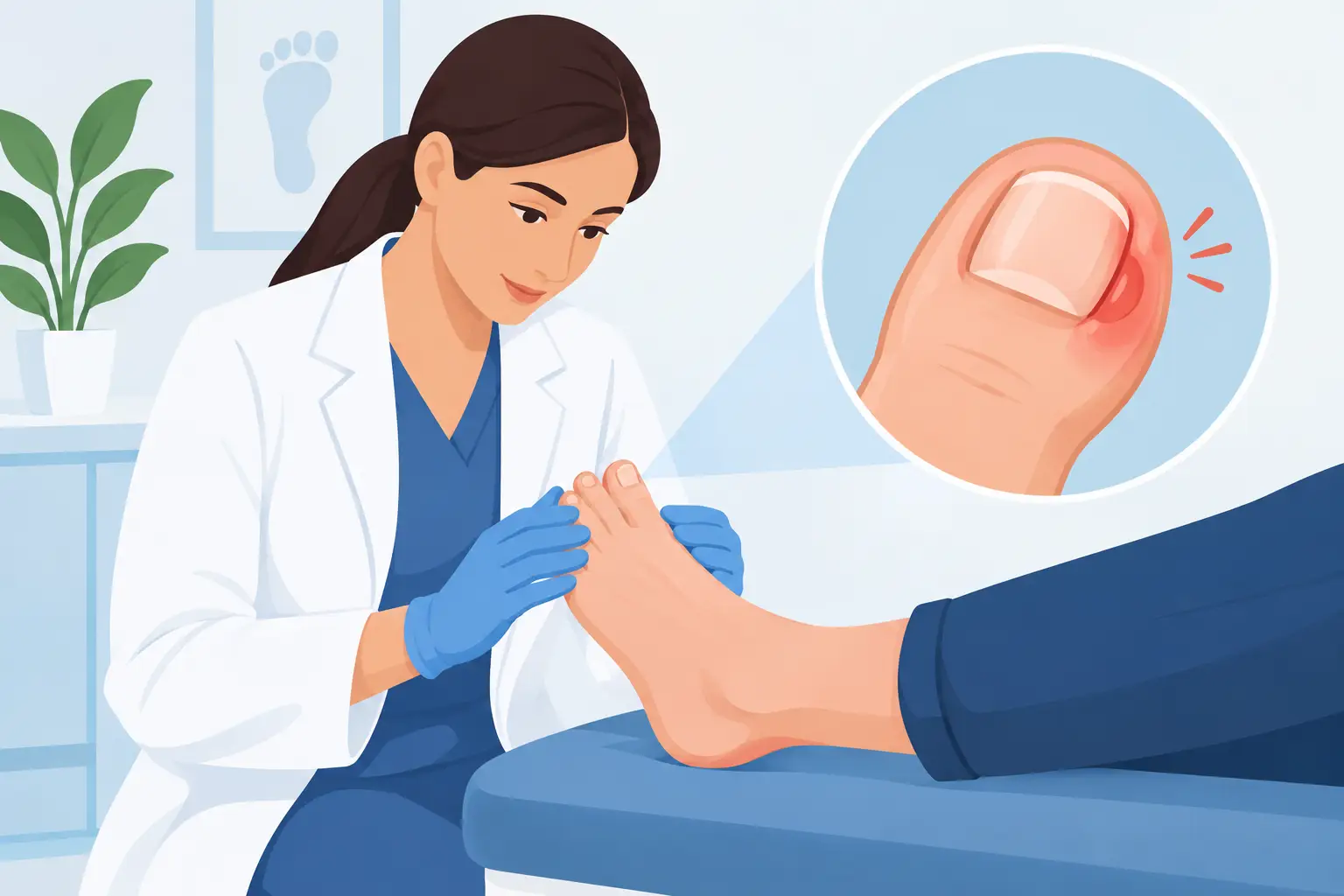
A sore big toe can quickly become more than a minor annoyance. When the edge of a nail presses into the surrounding skin, walking, wearing ordinary shoes and even the weight of bedding can become uncomfortable. Seeing a podiatrist for ingrown toenail symptoms can provide relief while addressing the reason the nail has begun to grow into the skin.
An ingrown toenail most often affects the big toe, although any toenail can be involved. Early treatment is usually simpler and more comfortable than waiting until the toe is swollen, infected or repeatedly painful. A podiatrist can assess the nail, the skin around it and the pressures placed on your feet, then discuss an individually tailored plan for you.
What is an ingrown toenail?
An ingrown toenail occurs when the side or corner of a nail curves down and irritates, breaks or grows into the skin beside it. The body responds with inflammation, so the area may become tender, red and swollen. In some cases, a small amount of fluid, bleeding or discharge develops as the skin becomes damaged or infected.
It is not always obvious why a nail has started to cause trouble. Tight or narrow footwear can compress the toes, while a knock to the nail during sport or work may alter how it grows. Cutting the nail too short or rounding the corners can leave a sharp edge that catches the skin as the nail grows out. Some people are also more prone to ingrown toenails because of the natural shape of their nails or toes.
For children, teenagers and active adults, repeated pressure from school shoes, football boots, running shoes or safety footwear can be a significant factor. For older adults, reduced flexibility can make nail care more difficult, while changes in circulation, sensation or nail thickness may need particular consideration.
When should you see a podiatrist for an ingrown toenail?
A mildly sore nail edge that has only just started may settle with careful footwear choices and sensible nail care. However, do not keep trying to dig down the side of the nail, cut a V into it or remove a corner yourself. These approaches can damage the skin, leave a sharp nail spike behind and make the problem harder to resolve.
It is sensible to book a podiatry appointment if pain is persisting, the toe is swollen, the nail keeps catching the skin or the problem has returned before. A podiatrist can remove offending nail fragments where appropriate and reduce pressure on the surrounding tissue without unnecessary trauma.
Seek prompt medical advice if you have any of the following:
- Increasing redness, heat, swelling, throbbing pain or discharge from the toe
- Redness spreading beyond the immediate nail area, or you feel feverish or unwell
- Diabetes, poor circulation, reduced feeling in your feet or a condition affecting your immune system
- A rapidly worsening toe following an injury, or severe pain that makes it difficult to bear weight
These circumstances can increase the risk of complications and should not be managed with home treatment alone. Your podiatrist may treat the nail problem directly, advise you to speak to your GP, or coordinate the most appropriate next step based on your assessment.
What a podiatrist can do for an ingrown toenail
Your appointment begins with a discussion about your symptoms, general health, footwear, activity and any previous treatment. The podiatrist will examine the affected toe and may also look at your foot shape, how your shoes fit and other nails that could be at risk. This wider assessment matters because simply removing the painful edge may not prevent repeated irritation.
For a straightforward ingrown toenail, conservative treatment may be all that is needed. This can involve carefully removing a small nail spicule, reducing a thickened or curved nail, clearing debris and protecting the tender skin. You will receive clear advice about keeping the area clean, dressing it if necessary and choosing footwear that avoids pressure while it settles.
If infection is suspected, the clinician will assess its severity and explain whether further medical support is needed. Antibiotics are not automatically required for every sore ingrown toenail. Removing the nail edge and relieving the source of irritation is often central to recovery, although treatment decisions depend on the appearance of the toe and your medical history.
When nail surgery may be considered
If a nail repeatedly grows into the skin, conservative care may bring short-term relief without solving the longer-term issue. In this situation, a podiatrist may discuss nail surgery. This is usually a planned procedure carried out under local anaesthetic, so the toe is numb during treatment.
Often, only the troublesome strip at one or both sides of the nail is removed rather than the entire nail. A chemical may be used to stop that narrow section from growing back, leaving the remaining nail slimmer. In selected cases, total nail removal may be considered, but this is not the default and should be based on the condition of the nail and your preferences.
There are trade-offs to discuss. Nail surgery has a recovery period and requires aftercare, but it can be an effective option for recurrent, painful ingrown toenails. Your podiatrist should explain the expected healing process, possible risks and alternatives before you decide.
Preparing for your appointment and aftercare
Before your consultation, avoid cutting deeply into the side of the nail or using sharp implements to lift it. If the toe is weeping, a clean dressing and roomy footwear can help protect it on the way to the clinic. Bring details of relevant medication and health conditions, particularly diabetes, blood-thinning medication, circulation concerns or allergies.
After routine treatment, discomfort is often reduced quickly, although inflamed skin can take time to settle. Follow the dressing and hygiene advice you are given, and keep the toe protected from rubbing. If you have had a procedure, your podiatrist will provide specific guidance on washing, dressings, activity and follow-up appointments. Healing times vary depending on the extent of treatment, the condition of the surrounding skin and your general health.
Do not assume that a lack of pain means the area no longer needs care. Attend recommended reviews and contact the clinic if you notice increasing pain, odour, discharge, redness or any concern about healing.
Reducing the chance of it returning
Prevention is not about cutting nails into a perfect shape. It is about reducing pressure and avoiding sharp edges that can enter the skin. Cut toenails straight across where possible and avoid cutting them very short. If the corners are rough, gently file them rather than digging them out.
Shoes should allow room for your toes to sit naturally without being squeezed together. This can be especially relevant when buying running shoes, work boots or formal footwear, where a good fit around the forefoot is just as important as length. Keep feet clean and dry, change socks regularly and address thickened or difficult-to-cut nails with professional help rather than struggling at home.
If sport, work footwear or repeated trauma is contributing, your podiatrist can help identify practical changes. That might mean reviewing shoe fit, protecting the toe during activity or arranging regular nail care where appropriate. For people with reduced mobility or long-term health conditions, routine podiatry can also support comfortable walking and confidence in everyday movement.
At Faringdon Wellbeing Clinic, our podiatry care is focused on clear explanations and treatment choices that fit your needs. Whether this is your first painful nail edge or a problem that keeps returning, early assessment can help you move more comfortably and make decisions with confidence.


