A stiff neck after long hours at a desk, recurring lower back pain after gardening, or a sporting injury can make the choice of practitioner feel more complicated than it should. When considering osteopathy versus chiropractic care, the most useful question is not which profession is universally better. It is which assessment, treatment approach and rehabilitation plan best suit your symptoms, health history and goals.
Both osteopaths and chiropractors work with musculoskeletal concerns, including back and neck pain, joint discomfort and some injury-related problems. Both are regulated healthcare professions in the UK. Their approaches overlap in several areas, but the emphasis of their assessment and treatment can differ.
Osteopathy versus chiropractic care: the central difference
Osteopathy and chiropractic care both use hands-on assessment and treatment, often alongside advice about movement, activity and self-management. Neither should be viewed as a one-size-fits-all answer to pain. A good consultation starts with listening carefully to how your symptoms began, what affects them and how they are changing.
Osteopathy tends to take a broad view of how the body’s joints, muscles, connective tissues and movement patterns may be contributing to a problem. Treatment may focus on the painful area, but also on nearby or related areas that affect how you move. For example, an osteopath assessing recurrent knee pain may consider hip control, ankle mobility, training load and the demands of your work or sport.
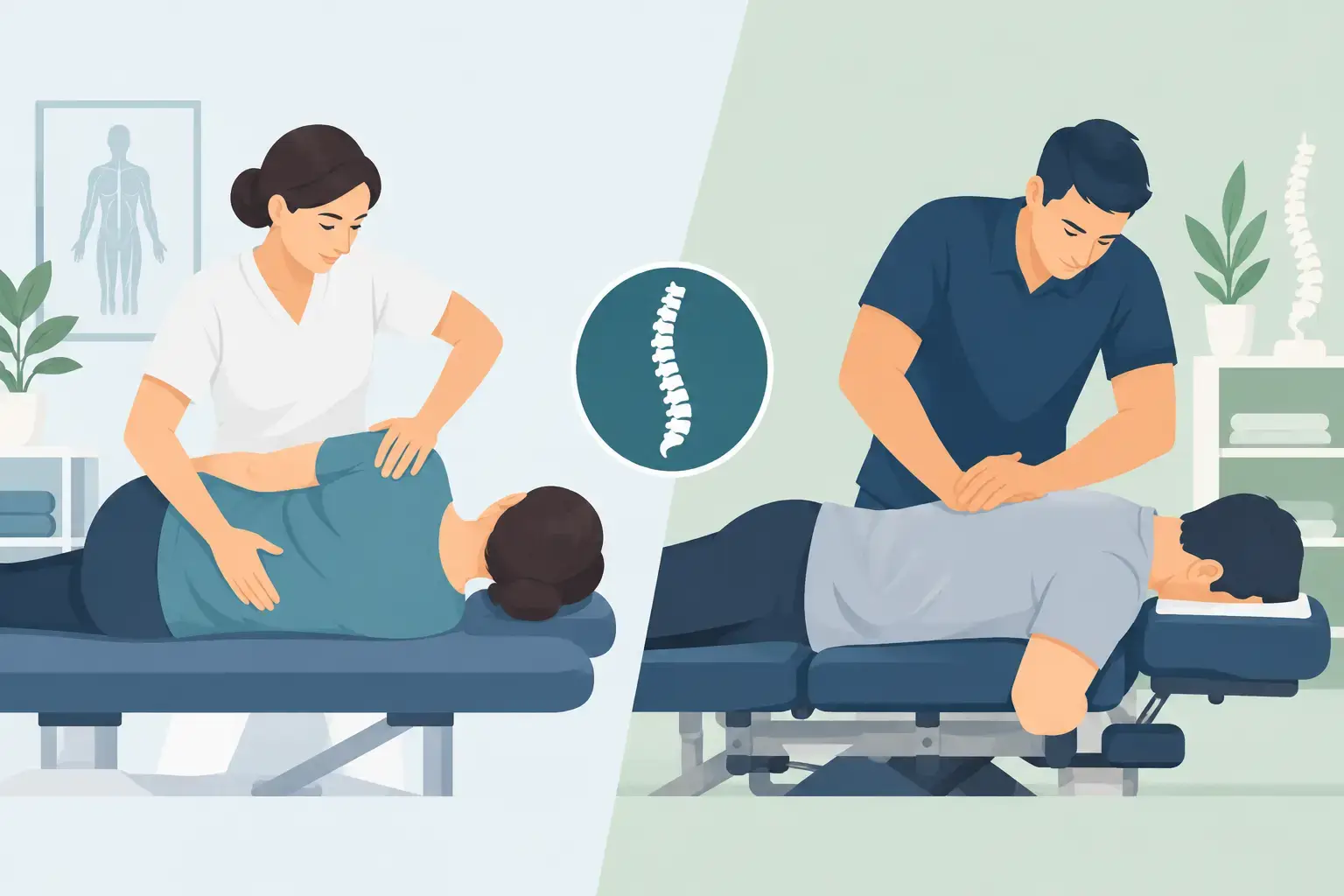
Chiropractic care traditionally places a stronger emphasis on the relationship between the spine, joints and nervous system. Chiropractors commonly use manual techniques, including spinal mobilisation or manipulation, to address restricted movement and musculoskeletal pain. Many also provide exercise and posture advice.
In practice, the experience can vary considerably between individual practitioners. Some osteopaths use a very exercise-led approach, while some chiropractors spend substantial time on rehabilitation and movement coaching. It is sensible to ask how a practitioner usually assesses and manages the type of problem you have.
What does osteopathic treatment involve?
Osteopaths are trained to assess, diagnose and treat a wide range of musculoskeletal symptoms. In the UK, they must be registered with the General Osteopathic Council to use the title osteopath. Their training includes anatomy, physiology, pathology, clinical examination and hands-on treatment.
An osteopathic appointment commonly begins with questions about your symptoms, previous injuries, general health, medication, work, activity and what you would like to return to doing. The physical assessment may include observing your posture and movement, checking joint range, muscle strength and tenderness, and carrying out relevant clinical tests.
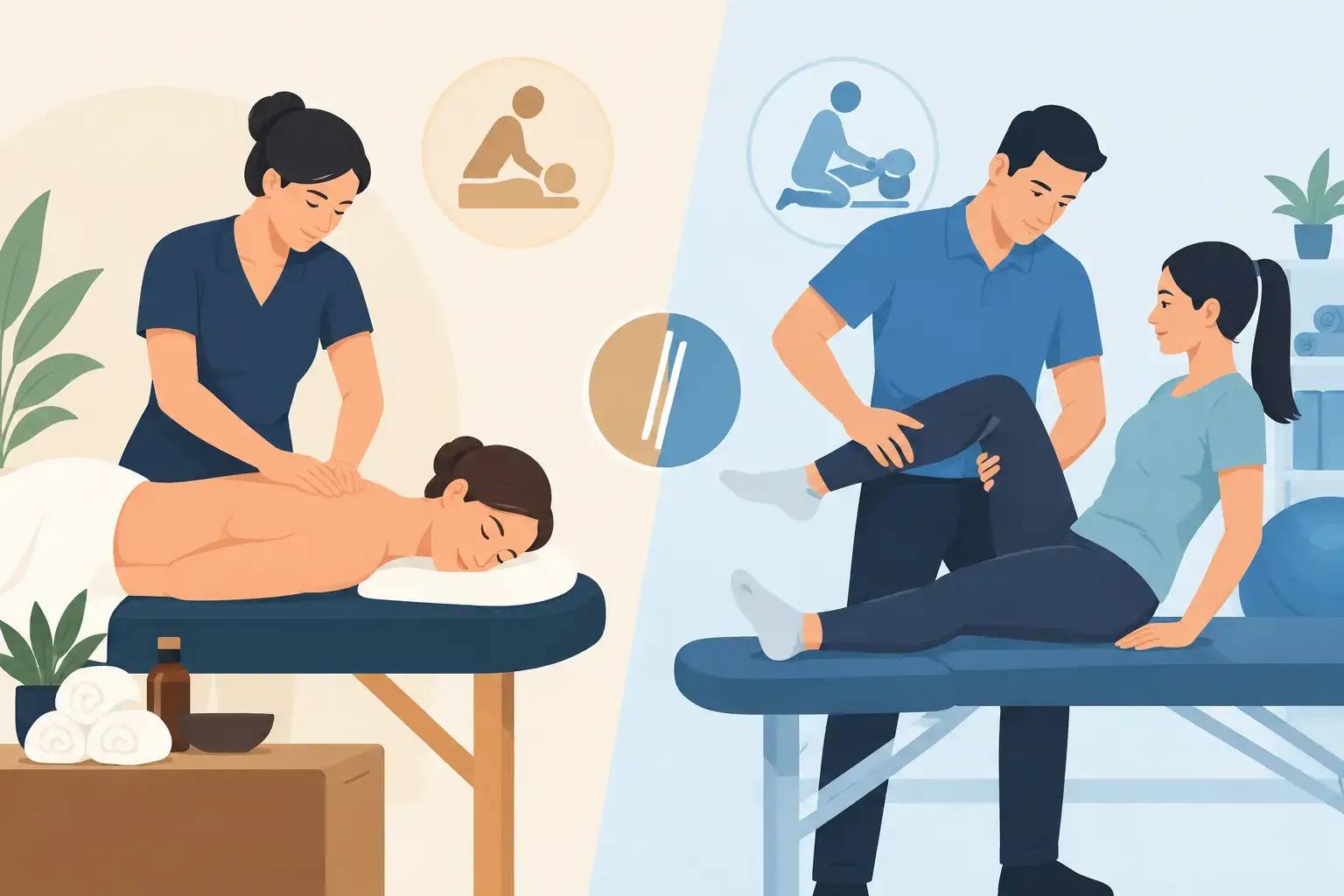
Treatment is individually tailored. It may include joint mobilisation, soft-tissue techniques, stretching, gentle articulation and, where appropriate, manipulation. An osteopath may also discuss pacing, lifting technique, desk setup, sleep positions or exercises that support your recovery between appointments.
This approach can be particularly helpful for people who want their pain considered in the context of their everyday function. That might mean being able to turn your head comfortably when driving, walk the dog without worrying about your hip, get through a workday with fewer flare-ups or return to running gradually and confidently.
What does chiropractic care involve?
Chiropractors are regulated by the General Chiropractic Council in the UK. They assess musculoskeletal conditions and commonly see people with back pain, neck pain, headaches associated with neck dysfunction and some joint problems.
A chiropractor will take a case history and carry out a physical examination before recommending care. Treatment often involves manual therapy, with spinal manipulation or adjustment being a well-known technique. Manipulation is a precise, quick movement applied to a joint, sometimes producing a popping sound. This sound is not a measure of whether treatment has worked, and effective care does not depend on it.
Depending on the practitioner and the problem, chiropractic care may also include mobilisation, soft-tissue work, exercise prescription, advice on activities and discussion of ergonomics. Some people prefer this style of treatment, particularly where they have responded well to it in the past. Others may favour a gentler hands-on approach or a plan with more emphasis on graded exercise. Both preferences are reasonable to discuss.
Where do the approaches overlap – and what does the evidence say?
For common musculoskeletal pain, especially lower back pain, neck pain and certain joint problems, manual therapy can help some people improve pain and movement in the short term. It is rarely the whole answer on its own. The most useful plans usually combine appropriate hands-on care with clear advice, gradual return to normal activity and exercises that build strength, mobility or confidence where needed.
Research does not show that one profession consistently outperforms the other for every condition. Your outcome is likely to depend on the nature of your symptoms, the quality of the assessment, the clinician’s skills and whether the plan addresses the factors keeping the problem going.
Manual treatment should have a purpose. If it makes movement easier or reduces pain enough for you to sleep better, exercise, work or rehabilitate more effectively, it may be a valuable part of care. If treatment offers only brief relief without a plan for longer-term progress, it is worth asking what needs to change.
Spinal manipulation is not suitable for everyone. Although serious complications are uncommon, particularly careful screening and informed consent are essential before treatment around the neck. A qualified practitioner should explain expected benefits, alternatives and possible side effects, and should welcome your questions.
How to choose the right practitioner for you
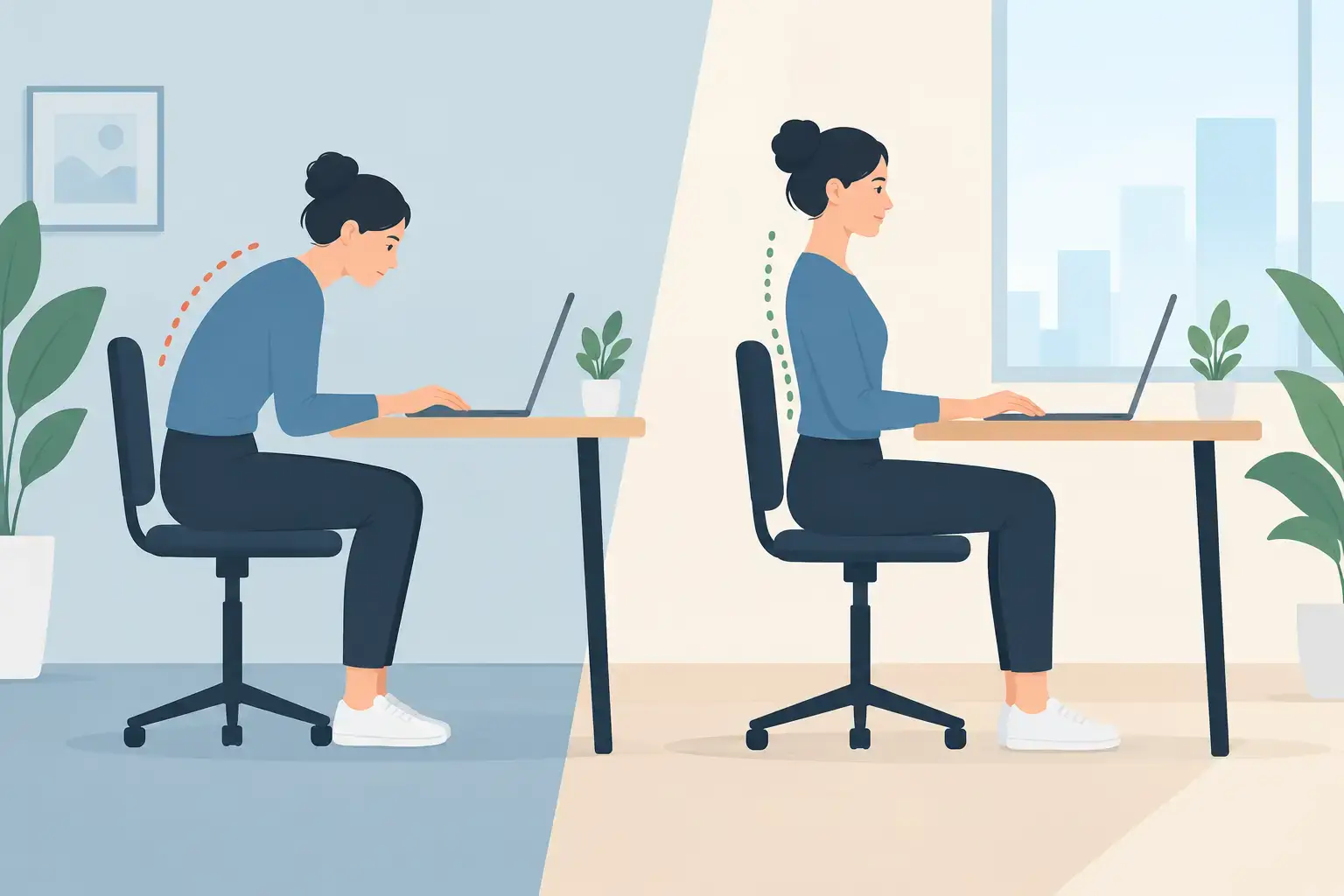
Start with the problem you want help with rather than the label of the profession. For a recent sporting injury, you may want a clinician experienced in assessing training load and planning a return to sport. For persistent pain linked to desk work, a practitioner who can combine treatment with ergonomic guidance and practical movement advice may be a better fit.
Ask about the practitioner’s experience of your symptoms, what assessment they will carry out and what a first appointment involves. It can also help to ask how they decide whether treatment is working. You should leave with a clear understanding of the likely plan, how often review may be useful and what you can do for yourself.
Consider your own treatment preferences as well. Some people value hands-on treatment and want a practitioner to explain why particular areas are being assessed. Others are primarily seeking a structured rehabilitation programme. There is no need to choose between passive treatment and exercise as fixed opposites: the balance should change according to your presentation, stage of recovery and confidence with movement.
When a wider clinical view is useful
Pain does not always sit neatly within one discipline. Ongoing shoulder pain may benefit from osteopathic assessment and targeted physiotherapy rehabilitation. Foot pain can alter the way you walk and contribute to symptoms higher up the leg, making podiatry input useful. A stubborn tendon problem may need an exercise-led plan, with other options considered only after a thorough assessment.
At Faringdon Wellbeing Clinic, patients can access osteopathy alongside physiotherapy, podiatry, sports and remedial massage, acupuncture, ergonomic assessment and other services where appropriate. This can be helpful when a problem needs more than one perspective, while still keeping your care focused and easy to understand.
A responsible practitioner will also recognise when manual therapy is not the right next step. New or worsening weakness, numbness around the saddle area, changes to bladder or bowel control, unexplained weight loss, fever, significant trauma or severe unrelenting pain need prompt medical assessment. Seek urgent help for sudden neurological symptoms, chest pain or symptoms that make you feel acutely unwell.
What a good first appointment should feel like
You should feel heard, examined appropriately and involved in decisions about your care. A practitioner should not promise to fix every problem in a set number of sessions, and they should not pressure you into a lengthy treatment package before understanding your needs.
The right plan may involve a small number of appointments with self-management advice, a course of rehabilitation with review points, or referral to another clinician or your GP. Progress is not always linear, especially with longstanding pain or injury, but your goals and treatment plan should remain open to review.
Choosing between osteopathy and chiropractic care is ultimately about finding informed, respectful support that helps you move towards the life you want to lead. If you are unsure, begin with a thorough assessment and a conversation about what matters most to you – whether that is less pain, better mobility, a return to sport or simply greater confidence in everyday movement.