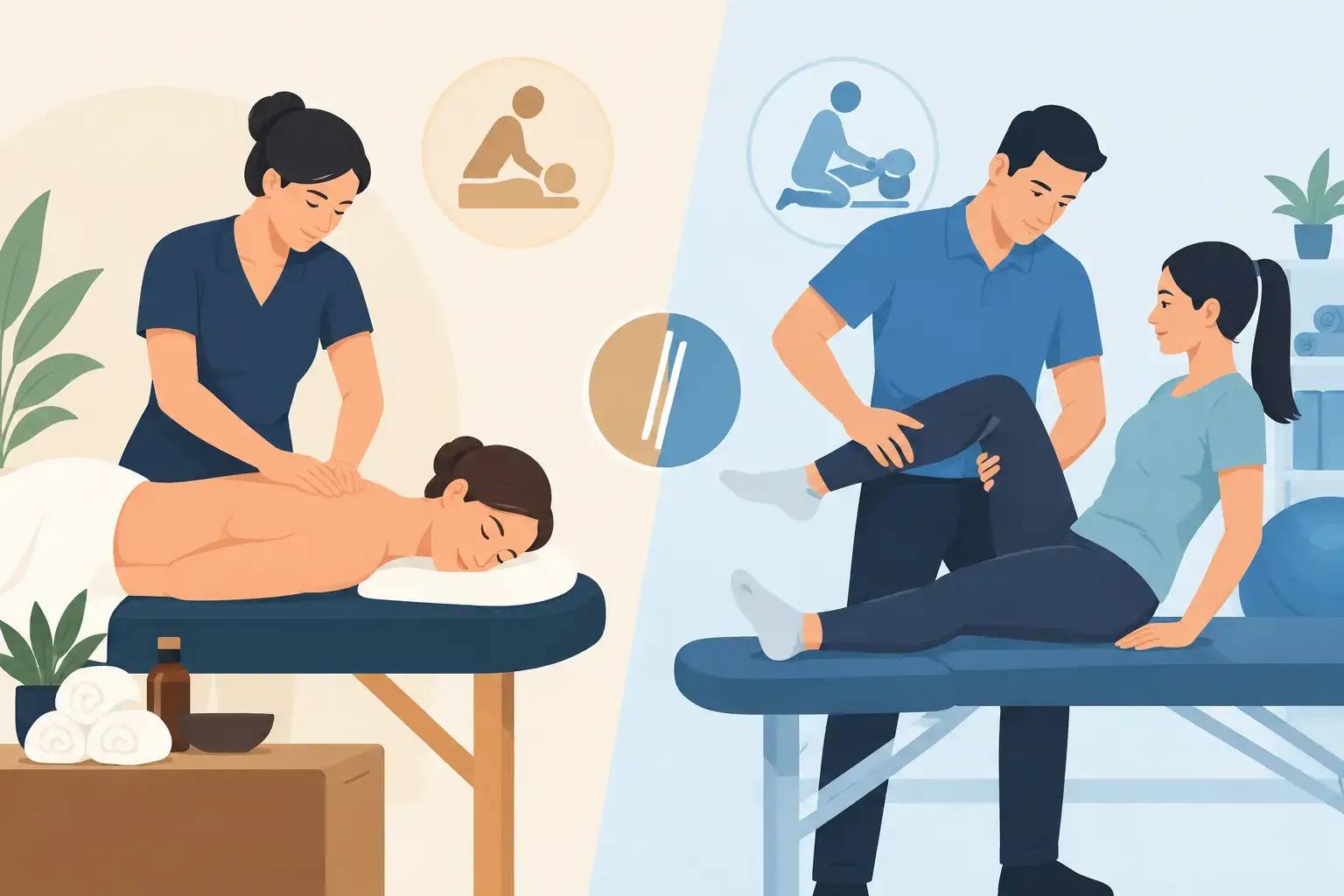
A tight calf after a run, an aching neck after a week at the desk, or a shoulder that has never felt quite right since an old injury can all leave you asking the same question: massage versus physiotherapy treatment – which is likely to help? The answer depends less on which treatment is “better” and more on what is causing your symptoms, what you need to return to, and whether there are signs that need a more detailed assessment.
Massage and physiotherapy can both support pain relief, movement and recovery. They are not interchangeable, however. One may be the right starting point for muscular tension and relaxation, while the other may be more appropriate where pain is persistent, function has changed, or a structured rehabilitation plan is needed.
Massage versus physiotherapy treatment: the key difference
Sports and remedial massage focuses primarily on muscles and other soft tissues. A qualified massage therapist uses hands-on techniques to address areas of tightness, sensitivity and fatigue, adapting pressure and approach to your comfort and aims. Treatment may help you feel less restricted, more relaxed and more comfortable moving.
Physiotherapy begins with a clinical assessment of pain, movement, strength, balance and function. A physiotherapist considers how your symptoms affect the things that matter to you, whether that is walking the dog comfortably, lifting at work, getting back to the gym, or staying steady on your feet. Treatment can include tailored exercise, movement retraining, education, hands-on techniques and advice on pacing activity.
Put simply, massage is often centred on soft-tissue comfort and recovery. Physiotherapy is designed to assess and rehabilitate a problem affecting movement or physical function. There is overlap: a physiotherapist may use soft-tissue techniques, and a massage therapist may advise on mobility and recovery habits. The training, assessment process and main treatment goals are different.
When massage may be a good fit
Massage can be particularly useful when your body feels overworked rather than injured. You may notice general muscular tightness after gardening, training, travelling, sitting for long periods or taking on a new physical challenge. Some people also choose regular massage as part of their recovery routine, especially during demanding training blocks or physically active work.
A sports and remedial massage appointment may be suitable if you want help with muscle soreness, stiffness or tension, without a major loss of function. It can also provide valuable time to notice patterns: perhaps your upper back always tightens during busy weeks, or your calves become uncomfortable after increasing your mileage too quickly.
The benefits are individual. Many people value the immediate sense of ease after treatment, but massage is not a guaranteed cure for pain and should not be treated as a substitute for assessment when symptoms persist. For longer-lasting change, it may work best alongside realistic adjustments to training, sleep, workload and movement habits.
Massage for sport and active lives
For runners, cyclists, gym-goers and recreational sportspeople, massage may support recovery between sessions and help manage the feeling of heavy or tight muscles. It can be a welcome part of a training plan, but it cannot by itself correct a sudden loss of strength, repeated giving way, significant swelling or pain that changes how you run, jump or lift.
If an injury is limiting performance, physiotherapy assessment can identify the movements and loads that need attention. Massage may then sit alongside rehabilitation, helping you feel more comfortable as you build capacity again.
When physiotherapy is likely to be the better starting point
Physiotherapy is often the more appropriate choice if your symptoms are stopping you from doing everyday activities or have not settled as expected. This may include back or neck pain that keeps returning, a sprain that has left you unsteady, shoulder pain when reaching overhead, knee pain on stairs, or a tendon problem that flares whenever you exercise.
Your physiotherapist will look beyond the sore area. For example, painful knees may relate to changes in hip strength, walking pattern, training load or confidence after an earlier injury. A painful shoulder may need assessment of neck movement, posture, work set-up and how you use the arm. This broader view helps create a plan that is individually tailored for you rather than based solely on where it hurts.
Rehabilitation is a central part of physiotherapy. The aim is not only to settle symptoms but to help you regain strength, mobility, control and confidence. Exercises should be purposeful and manageable, with progressions that reflect your starting point and goals. For some people that means returning to football; for others, it means getting down to the floor to play with grandchildren and back up again safely.
Physiotherapy after injury or surgery
After a sporting injury, fracture, operation or period of reduced activity, it is common for the body to lose strength and trust in movement. Physiotherapy can provide a structured route back, with guidance on what to do now, what to avoid temporarily and how to progress without doing too much too soon.
This does not mean every problem needs an intensive programme. Sometimes a clear explanation, a few focused exercises and a review at the right time are enough. The value lies in having an experienced clinician assess what is relevant to your situation.
Can you have both treatments?
Yes. In many cases, massage and physiotherapy complement each other well. Someone with persistent back discomfort, for instance, may benefit from physiotherapy to improve movement tolerance and build strength, while massage supports short-term relief from surrounding muscle tension. An active person recovering from a calf strain may use physiotherapy to guide loading and return to running, with massage used carefully as part of comfort and recovery.
The order matters. If the cause of pain is uncertain, symptoms are worsening or you have a clear functional problem, begin with physiotherapy or another appropriate clinical assessment. Once you understand the issue, massage can be included where it supports your plan.
At Faringdon Wellbeing Clinic, the advantage of a multidisciplinary team is that care can be coordinated when one approach alone is not enough. Depending on your needs, this may include physiotherapy, osteopathy, sports and remedial massage, podiatry or other specialist support. You should always have a clear understanding of why a treatment is being recommended and what progress is expected to look like.
What should you expect at your first appointment?
A massage appointment will usually begin with a discussion about your symptoms, health history, activity and preferences. Your therapist should check for reasons to modify or postpone treatment, explain the proposed approach and obtain your consent throughout. You can ask for lighter pressure, let them know about sensitive areas and stop or change the treatment at any point.
At a physiotherapy appointment, expect more detailed questions and a movement-based assessment. You may be asked to perform relevant activities such as squatting, reaching, walking or balancing. Wear comfortable clothing that allows the area to be assessed. Your physiotherapist should explain their findings in plain language and agree a plan with you, including what you can realistically do between sessions.
Neither treatment should feel like something done to you without your involvement. Good care gives you choices, sets sensible expectations and respects that symptoms, confidence and recovery time vary from person to person.
When not to wait for massage or physiotherapy
Most aches and injuries can be assessed safely in clinic, but some symptoms need urgent medical advice instead. Seek prompt help for severe or unexplained pain following significant trauma, sudden weakness or numbness, loss of bladder or bowel control, a hot swollen joint with fever, chest pain, shortness of breath, or a painful swollen calf that is new and unexplained.
It is also sensible to speak to a clinician before massage if you have a history of blood clots, are taking certain blood-thinning medicines, have an active infection, or have recently had surgery. Being open about your medical history allows treatment to be adapted safely.
Choosing between massage and physiotherapy does not need to be a guess. Start with the change you want to make – less tension, easier movement, stronger recovery or a return to a valued activity – and choose the practitioner whose assessment and treatment approach best supports that next step.