A knee that feels weak can make everyday tasks unexpectedly demanding. Stairs, getting up from a chair, walking downhill or returning to a favourite sport may bring a sense that the leg will not quite support you. Learning how to strengthen weak knees is rarely about working the knee in isolation. It is about improving the capacity of the muscles, joints and movement habits that help control it.
The right approach depends on why your knee feels weak. For some people, it follows an injury or a period of reduced activity. For others, pain, arthritis, poor balance, altered foot mechanics or weakness around the hip and thigh may be part of the picture. A gradual, individually tailored plan is usually more useful than pushing through a generic exercise routine.
First, understand what “weak” means
People use the word weak to describe several different sensations. Your knee may feel painful when loaded, unsteady when turning, stiff after sitting, or genuinely unable to produce force when climbing stairs. These can overlap, but they do not always have the same cause.
After swelling, injury or pain, the quadriceps muscles at the front of the thigh can become less effective at supporting the knee. Weakness in the gluteal muscles can also affect how the thigh and knee line up during walking, squatting and stepping. Calf strength, ankle movement and the way the foot contacts the ground matter too. This is why a good rehabilitation plan looks at the whole leg rather than relying on one exercise.
If your knee has recently locked, given way following a twist, become significantly swollen, hot or red, or you cannot comfortably bear weight, seek a prompt clinical assessment. The same applies if calf swelling, breathlessness, fever or unexplained severe pain is present. Exercise is valuable, but it should not delay care where a more urgent problem is possible.
How to strengthen weak knees with controlled loading
Knees become more resilient when they are exposed to enough load to encourage adaptation, without repeatedly provoking significant pain or swelling. Start at a level you can control well, then build gradually. Mild muscular effort and temporary discomfort can be normal; sharp pain, worsening swelling or pain that remains substantially worse into the following day suggests the exercise needs adjusting.
Aim for two or three strength sessions each week, leaving recovery time between them. Begin with one or two sets of 8 to 12 repetitions, using a range of movement that feels manageable. As control improves, add repetitions, resistance, depth or balance challenge – usually one change at a time.
Start with the thigh muscles
The quadriceps help straighten the knee and absorb force when you stand, walk, climb or descend stairs. If bending the knee is currently uncomfortable, begin with a simple isometric exercise. Sit or lie with the leg straight, tighten the thigh as though pressing the back of the knee gently down towards the floor or bed, hold for five to ten seconds, then relax. Repeat several times.
When this becomes comfortable, try a sit-to-stand from a firm chair. Place your feet hip-width apart, lean forward slightly from the hips and stand up without using your hands if you can do so safely. Lower yourself slowly and with control. A higher chair makes the movement easier; a lower chair or a slower lowering phase makes it harder.
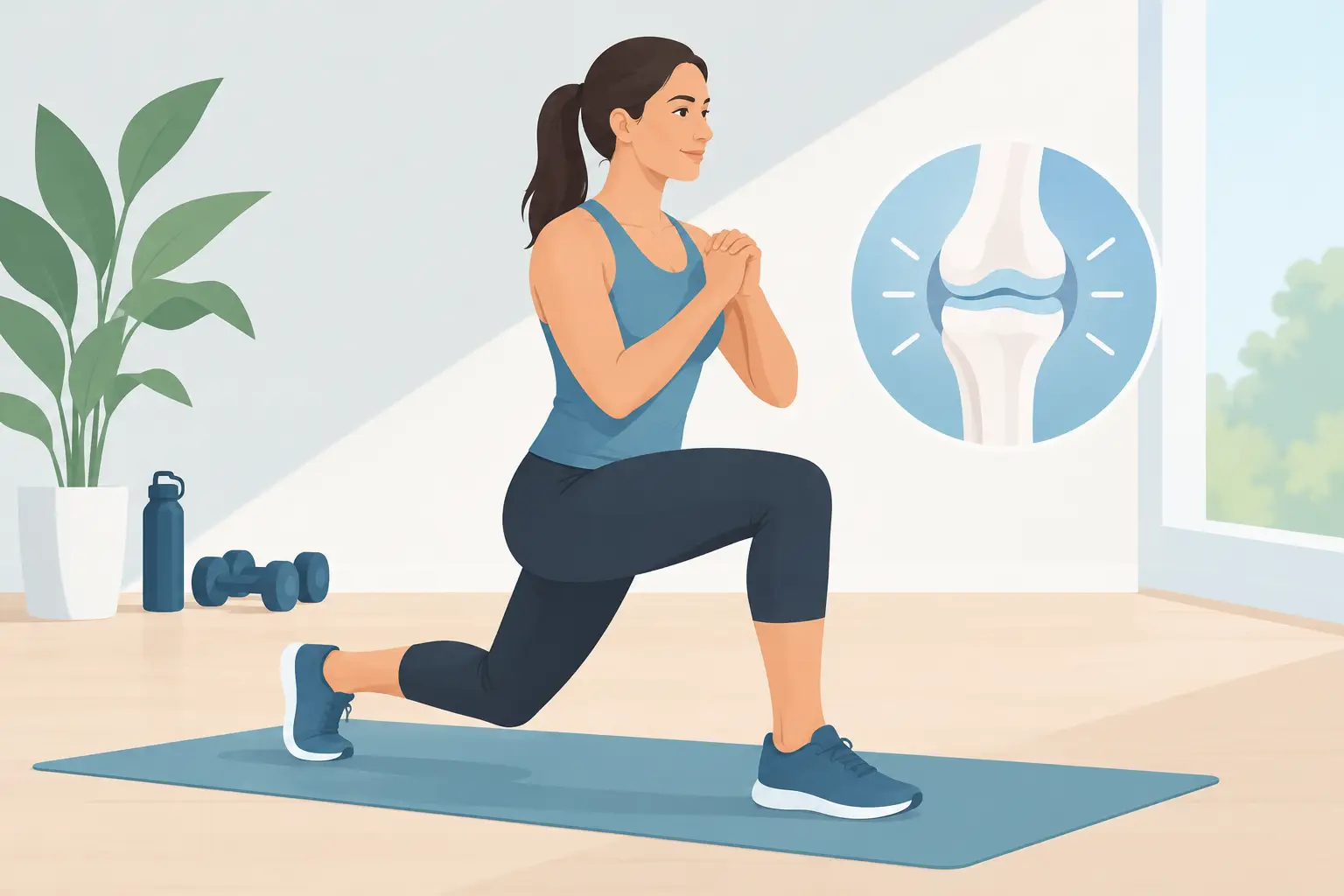
A supported mini-squat is another useful progression. Hold a kitchen worktop or sturdy chair, send your hips back slightly and bend both knees only as far as you can maintain a smooth, controlled movement. Keep the knees tracking in the same direction as the toes rather than allowing them to collapse inwards.
Do not overlook hips and calves
Strong hips help guide the leg during single-leg activities, including walking and stair climbing. Side-lying leg lifts, standing hip abductions while holding a support, and bridge exercises can build this control. The goal is not to hold your body rigidly, but to move with steadiness and without compensating through the lower back.
Calf raises deserve a place in most knee-strengthening programmes. Rise onto your toes while holding a support, pause briefly, then lower slowly. The calf and ankle help manage load as the body travels over the foot. Limited ankle movement or reduced calf strength can lead the knee to work harder during everyday activities.
If pain is mainly around the kneecap, your starting range and exercise choice may need more care. For example, a shallow sit-to-stand may be better tolerated than a deep squat, while cycling with a low resistance may offer a useful way to build confidence. There is no single best exercise for every painful knee.
Add balance before returning to demanding activity
Strength is only part of feeling secure on your feet. Balance and coordination help you react to uneven ground, a quick change of direction or a missed step. Start by standing near a worktop with your feet together, then progress to a semi-tandem stance, with one foot slightly ahead of the other. When safe, practise standing on one leg while keeping a hand close to support.
For people returning to running, field sports or court sports, rehabilitation should eventually include more sport-specific work. This may involve step-downs, controlled hops, changes of direction and gradual exposure to speed. These exercises are not a sensible starting point for a painful or unstable knee, but they can be essential later on if the aim is to return to higher-impact activity with confidence.
Use daily movement to support recovery
A strengthening programme works best alongside appropriate everyday activity. Complete rest can reduce fitness and muscle capacity, particularly after an injury flare-up. Equally, abruptly doubling your walking distance, taking on a steep hill route or returning to a high-impact class can overload a knee that is not ready.
Choose movement you can recover from. Walking on level ground, a stationary bike, swimming or water-based exercise may be more comfortable ways to maintain fitness while building strength. Track how the knee responds during activity, later that day and the next morning. This feedback helps you find a pace that is challenging but sustainable.
Footwear can also affect comfort, especially if you spend long periods standing or walking. Shoes do not need to be perfect, but a supportive, well-fitting pair that suits your activity can be helpful. If foot pain, altered gait or recurring knee symptoms are part of the problem, a podiatry assessment may identify factors worth addressing.
When professional support can make a difference
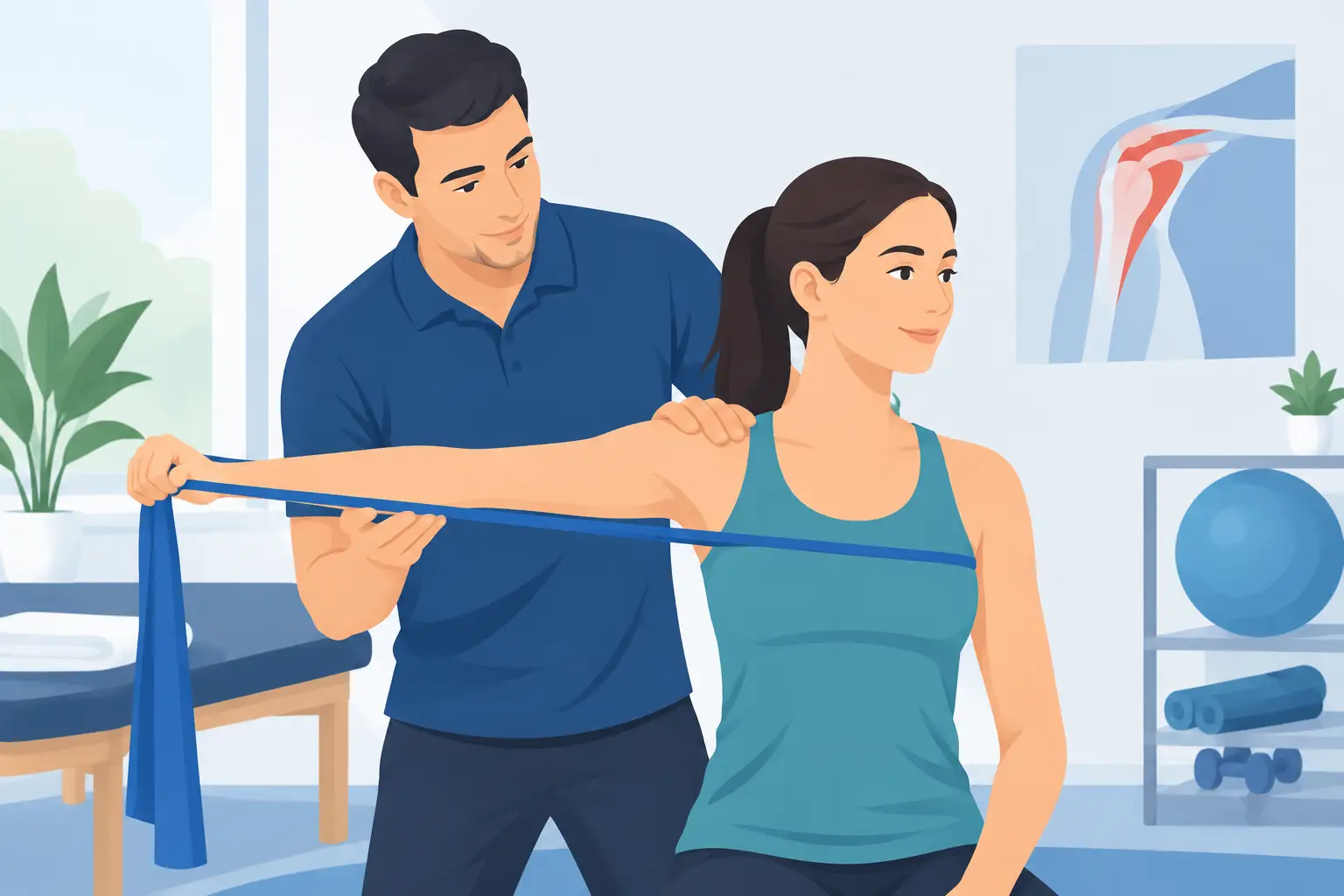
A physiotherapy or osteopathy assessment can be particularly helpful if symptoms have persisted, your knee repeatedly gives way, you are unsure which exercises are safe, or you have a specific goal such as returning to sport, work or longer walks. An experienced practitioner can assess knee movement, muscle strength, balance, hip and ankle function, walking pattern and relevant training or lifestyle factors.
Your plan may include hands-on treatment where appropriate, but rehabilitation remains central. The exercises should be adapted to your symptoms, starting ability and goals, then progressed as you gain strength and confidence. If imaging, injection options or another specialist opinion may be relevant, coordinated care can help you understand the available choices.
At Faringdon Wellbeing Clinic, our practitioners can support a personalised rehabilitation plan that considers both the knee itself and the wider factors affecting how you move.
Give your knees time to adapt
Meaningful improvement often takes weeks rather than days, particularly if you have been less active for some time. Consistency matters more than punishing sessions. Keep the exercises simple enough to repeat, progress them when they feel controlled, and let the way your knee responds guide the next step.
A stronger knee is not simply one that can lift more weight. It is one that helps you walk, work, exercise and enjoy daily life with greater comfort, trust and freedom of movement.