A kettle that suddenly feels too heavy, pain when turning a key, or an ache after a day at the computer can all point to tennis elbow. Despite its name, this problem is not limited to tennis players. Effective tennis elbow treatments focus on settling the irritated tendon, restoring the arm’s capacity for everyday tasks and sport, and addressing the repeated strain that led to the problem in the first place.
Tennis elbow is often frustrating because it can linger when an elbow is repeatedly asked to do more than it can currently tolerate. With the right assessment and a plan tailored to your work, hobbies, symptoms and goals, most people can make steady progress without simply stopping everything they enjoy.
What is tennis elbow?
Tennis elbow, also called lateral elbow tendinopathy, causes pain around the bony outer part of the elbow. The wrist extensor tendons attach here. These tendons help you lift your wrist, grip, carry, type, use tools and control a racquet.
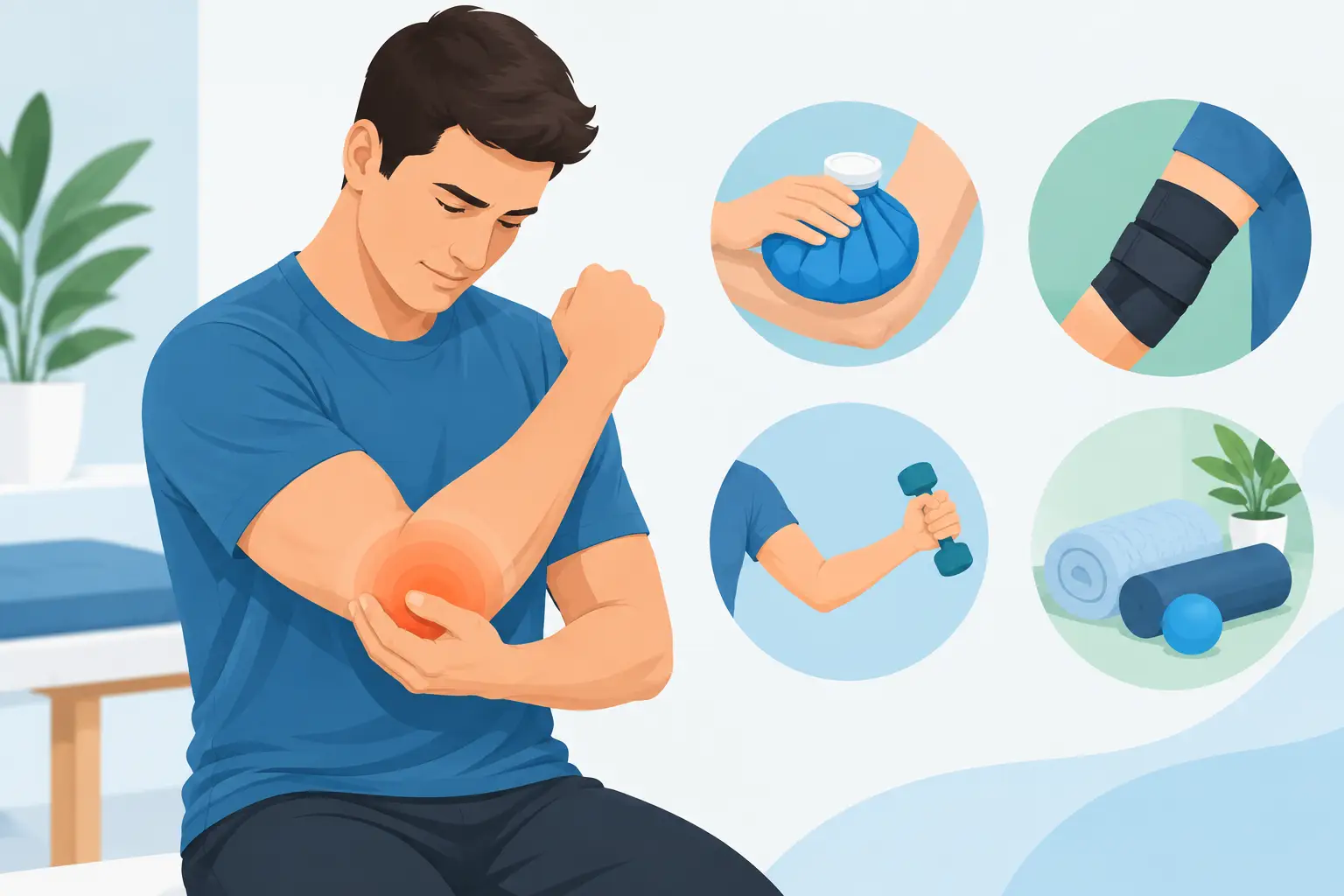
Symptoms commonly include tenderness on the outside of the elbow, pain when gripping or lifting with the palm facing down, and discomfort when twisting a door handle or pouring from a pan. The pain may travel into the forearm, and grip can feel weak, although the hand itself is not necessarily damaged.
It is often linked with a rapid increase in repetitive activity. This might be a new gym programme, decorating, gardening, playing racquet sports, manual work or long periods of mouse use. Sometimes there is no single obvious cause. Tendon pain is influenced by more than one factor, including workload, recovery, movement habits, sleep and general health.
Why an individual assessment matters
Outer elbow pain is common, but it is not always tennis elbow. Neck-related symptoms, nerve irritation, arthritis and other tendon problems can produce similar discomfort. A practitioner-led assessment helps establish what is being irritated, what movements provoke it and whether there are contributing factors elsewhere in the shoulder, neck, wrist or workstation.
Your clinician should also ask how the problem affects daily life. A treatment plan for a builder who needs to use tools will differ from one for a keen golfer, a parent lifting a toddler or an office worker whose pain develops by mid-afternoon. This is where clear goals matter: less pain at rest is useful, but confidence to grip, lift and return to valued activities is usually the longer-term aim.
Seek prompt medical advice if elbow pain follows a significant injury, the joint is hot, red or very swollen, you have a fever, or you develop persistent numbness, marked weakness or loss of hand control. These features need assessment rather than self-management alone.
Tennis elbow treatments: what may help
There is no single treatment that suits every person or stage of recovery. The most reliable approach usually combines sensible activity modification with progressive rehabilitation. Passive treatments may help symptoms, but they work best when they support a wider plan to improve tendon strength and tolerance.
Adjust the load without avoiding all movement
Complete rest can make the arm feel more sensitive and weaker over time. Instead, it is often helpful to temporarily reduce or adapt the activity that consistently aggravates symptoms. That may mean using two hands for a heavy pan, taking shorter gardening sessions, changing grip size, varying computer tasks or pausing a painful exercise variation.
This is not about avoiding every sensation. Mild, manageable discomfort during rehabilitation can be acceptable, particularly if it settles afterwards and does not leave you markedly worse the next day. Your practitioner can help you find an appropriate level, as the right amount of activity depends on your starting point.
Progressive exercise and rehabilitation
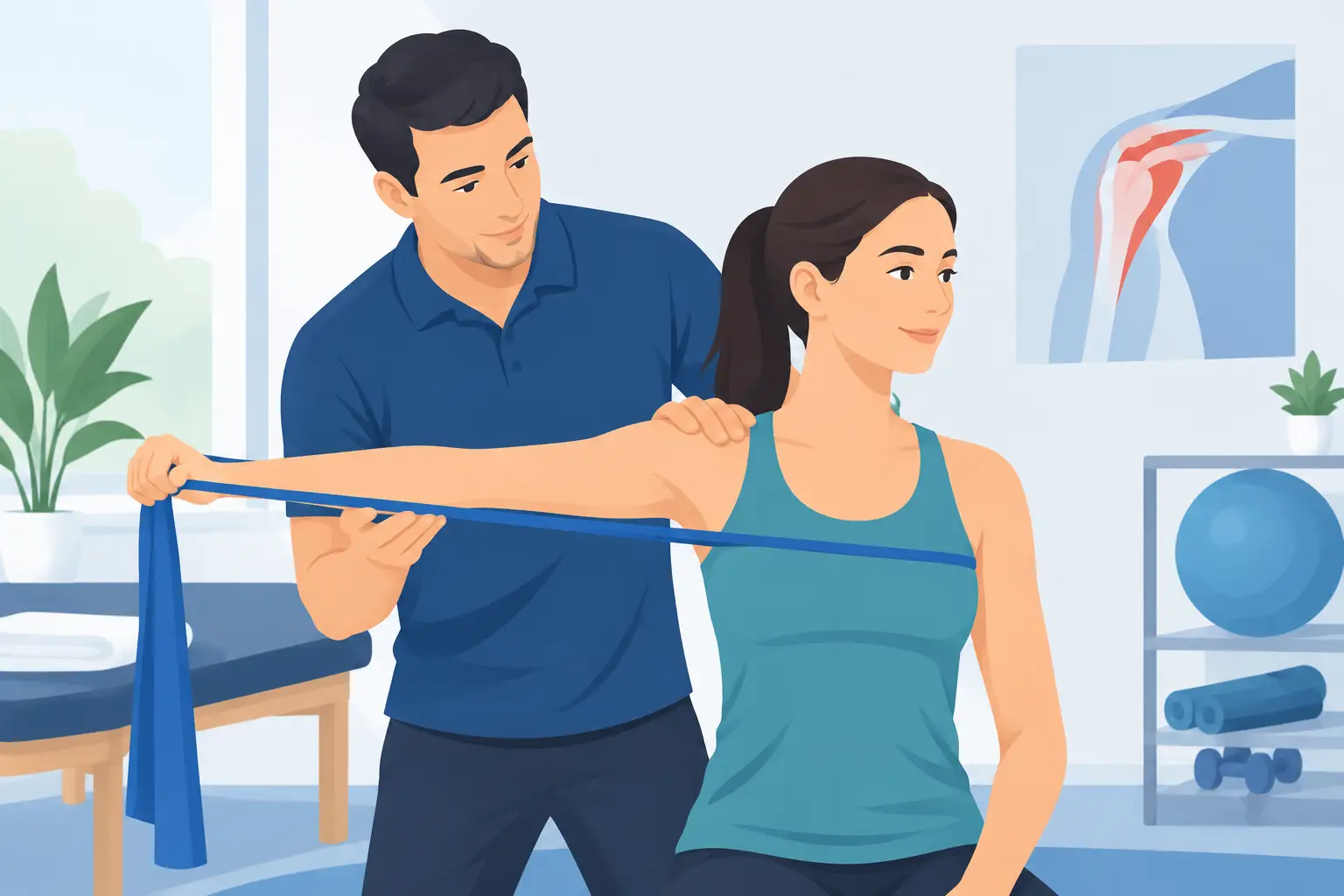
A structured exercise programme is a central part of recovery. It commonly includes exercises for the wrist extensor muscles, progressing from controlled holds to slow lifting and lowering, then more functional grip, carrying and sport-specific work. Shoulder and upper-back strength may also be relevant, especially where posture, reaching or racquet technique contributes to repeated overload.
Exercises need to be progressed, not just repeated indefinitely. If they are too easy, the tendon may not gain capacity. If they are introduced too quickly, symptoms can flare. Follow-up appointments allow the programme to change as grip strength, pain levels and confidence improve.
Hands-on treatment and movement support
Physiotherapy or osteopathic care may include hands-on techniques to address painful or restricted movement in the elbow, wrist, shoulder or neck. This can be useful when stiffness and muscle tension are limiting comfortable movement. Treatment should be paired with practical advice and rehabilitation rather than presented as a stand-alone cure.
Sports or remedial massage may help some people feel more comfortable in the surrounding forearm muscles, particularly where protective tension has built up. It does not repair a tendon on its own, but it can be a helpful part of an individually tailored plan.
Ergonomics and technique changes
For desk-based work, small changes can reduce needless strain. These may include positioning the keyboard and mouse closer, supporting the forearm, avoiding a tightly clenched mouse grip and building in short movement breaks. An ergonomic assessment looks at how your actual workstation and work pattern affect symptoms, rather than relying on one standard set-up for everyone.
In sport or manual work, technique, equipment and training volume deserve the same attention. A racquet grip that is too small, a sudden increase in backhand practice or a poorly tolerated tool can keep loading the tendon beyond its current capacity. Changing one or two practical factors can make rehabilitation much easier to sustain.
Braces, pain relief and shockwave therapy
A forearm strap or wrist support may offer short-term relief during aggravating tasks for some people. It should not become a substitute for rebuilding strength, and fit matters. A clinician can advise whether a brace is worth trying and when to use it.
Simple pain relief or anti-inflammatory medicine may be appropriate for some people, depending on their medical history and any medicines they already take. A pharmacist, GP or prescribing clinician can advise on what is safe for you. Anti-inflammatory medication is not always suitable, and tendon pain is not necessarily driven by inflammation alone.
Shockwave therapy may be considered for persistent tendon pain that has not responded sufficiently to a well-followed rehabilitation programme. It delivers acoustic waves to the affected area and is usually provided as a course of treatments alongside exercise. Results vary, and it may cause temporary soreness, so a proper assessment is essential before deciding whether it is appropriate.
Injections and specialist options
Injections can have a place in selected cases, but the decision needs careful discussion. Corticosteroid injections can sometimes reduce pain in the short term, yet they are not automatically the best long-term option for tendon health and recurrence. Other interventions may be considered according to the diagnosis, duration of symptoms and response to conservative care.
Where symptoms are persistent or the diagnosis is uncertain, musculoskeletal ultrasound can help assess the tendon and guide next steps. At Faringdon Wellbeing Clinic, coordinated care can bring together assessment, rehabilitation, ergonomic advice and, where clinically suitable, specialist musculoskeletal interventions under one roof.
How long does recovery take?
Recovery is rarely linear. Some people notice meaningful improvement within several weeks, while longer-standing symptoms can take several months of consistent rehabilitation. Progress is best judged by what the arm can do: gripping more comfortably, carrying more, returning to a hobby for longer and recovering more quickly after activity.
A flare does not automatically mean damage has occurred or that treatment has failed. It may simply mean the tendon received more load than it could manage that day. Reviewing what changed, adjusting the plan and continuing at a tolerable level is usually more useful than abandoning rehabilitation altogether.
When to book an appointment
Consider an assessment if pain is affecting work, sleep, sport or everyday independence; if it has not improved after a few weeks of sensible changes; or if you are unsure what is safe to continue. Early guidance can prevent the cycle of repeatedly resting, flaring and losing confidence in your arm.
The most helpful next step is often a calm, practical conversation about the activities you need your elbow to manage. With a plan built around those real demands, recovery can become less about protecting your arm from life and more about preparing it to return to it.