Waking with a neck that will not comfortably turn towards the alarm clock, or feeling it tighten after an afternoon at a laptop, can make ordinary tasks surprisingly difficult. Knowing how to manage neck stiffness begins with recognising that the neck rarely works in isolation. Your posture, screen set-up, stress levels, sleep position, shoulder strength and recent activity can all affect how it feels.
For many people, a short period of stiffness improves with sensible movement and a few practical adjustments. However, recurring symptoms, severe pain or stiffness following an injury deserve a more individual assessment. The aim is not simply to force the neck to move further, but to restore comfortable, confident movement while addressing what may be contributing to the problem.
Why your neck can become stiff
The neck is a mobile structure that supports the head while coordinating with the upper back, shoulders and jaw. It is normal for it to feel temporarily stiff after an unfamiliar activity, a long drive, poor sleep or extended time in one position. Muscles may become protective and tense when they have been working hard or when a joint has been irritated.
Desk-based work is a common contributor, but posture is not about finding one perfect position and holding it all day. Even a well-arranged workstation can become uncomfortable if you remain still for too long. Regular changes of position are often more helpful than trying to sit perfectly.
Stiffness can also follow sport, gardening, lifting, carrying a child, or turning suddenly. Stress and poor sleep may increase muscle tension and make pain feel more noticeable. In some cases, headaches, shoulder pain, jaw tension or upper-back restriction are part of the same picture. This is why an assessment should consider your daily activities and goals, not just the sore area.
How to manage neck stiffness at home
If your symptoms are mild and there has been no significant accident or injury, start by keeping the neck gently active. Complete rest can make muscles feel more guarded. Move within a comfortable range rather than pushing through sharp pain.
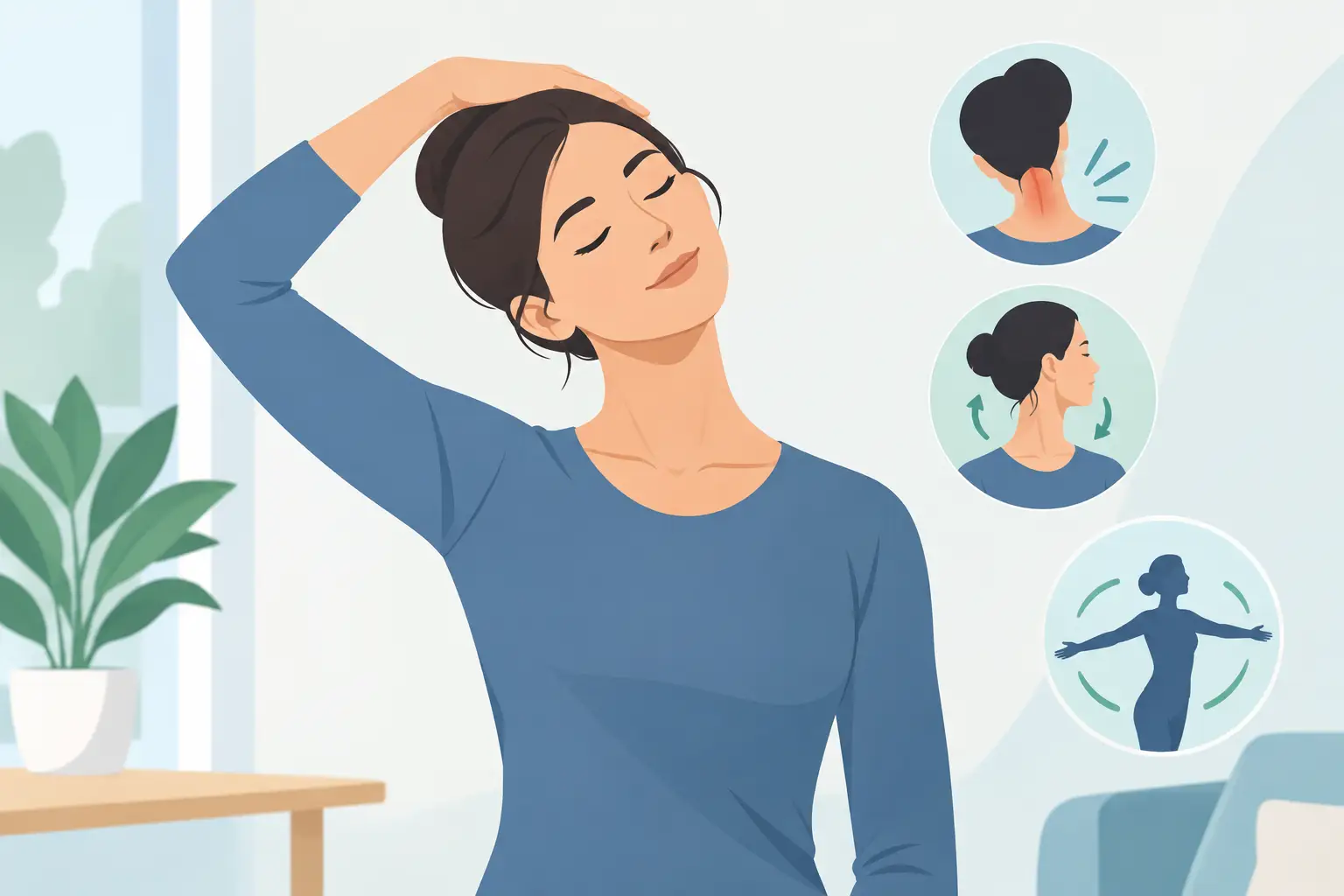
Try slowly looking left and right, then gently bringing each ear towards the corresponding shoulder. A small chin tuck, as though making a subtle double chin, can also be useful for some people. Repeat a few movements little and often through the day, particularly after screen time or driving. The movement should feel manageable and should settle shortly afterwards. If it clearly worsens pain, stop and seek professional advice.
Heat can be soothing for muscular tightness. A warm shower, heat pack or wrapped hot-water bottle for a short period may help you relax before gentle movement. Protect your skin and do not sleep with a heat source in place. Some people prefer a cold pack after a recent flare-up or activity-related strain, particularly if the area feels hot or irritated. There is no universal winner: use the option that feels most comfortable and helps you move more easily.
Pain-relief medicines may be appropriate for some people, but they are not suitable for everyone. A pharmacist can advise on safe over-the-counter options, especially if you have other health conditions, are pregnant, or take regular medication.
Make movement part of your day
A single stretch at the end of a long day is unlikely to offset hours of stillness. Build brief movement breaks into your routine instead. Stand up during calls, walk to refill your water, roll your shoulders, or look away from the screen and move your upper back every 30 to 60 minutes.
Gentle walking can be particularly valuable because it encourages natural arm swing and changes the load through the upper body. If you are returning to exercise after a flare-up, begin below the level that aggravates symptoms and build gradually. For example, reduce the weight, distance or duration first, rather than stopping all activity indefinitely.
Adjust your workspace without chasing perfect posture
Small ergonomic changes can reduce unnecessary strain. Position your main screen roughly an arm’s length away, with the top around eye level or slightly below. Place the keyboard and mouse close enough that you are not reaching forward with your shoulders. If you use a laptop for prolonged periods, a separate keyboard and mouse with a raised screen can make a meaningful difference.
Your chair should support you comfortably, but avoid treating it as a restraint. Sit back when it feels useful, vary your position, and ensure your feet are supported by the floor or a footrest. When using a phone, bring it closer to eye level where possible rather than repeatedly bending your head down towards it.
The best set-up depends on your height, work tasks, equipment and any existing symptoms. An ergonomic assessment can be helpful where neck discomfort is persistent, work-related or affecting concentration and productivity. It looks beyond a generic checklist to identify changes you can realistically maintain.
Consider sleep, stress and your wider routine
There is no single ideal pillow for every neck. The useful question is whether your pillow keeps your head reasonably supported and comfortable in your usual sleeping position. A pillow that is too high, too flat or compressed may leave the neck feeling awkward by morning. Side sleepers often need enough height to fill the space between the shoulder and head, while back sleepers may prefer a lower profile.
Avoid sleeping on your front if it consistently leaves you with a twisted, stiff neck, as this position requires prolonged rotation. That said, changing sleep habits is not always easy. Make gradual adjustments and focus on comfort rather than buying multiple pillows in search of a quick fix.
Stress management matters too. When deadlines, worry or poor sleep accumulate, the shoulders and neck often become a place where tension is held. Slow breathing, a short walk, gentle exercise or a regular wind-down routine may not remove the source of stress, but they can reduce the physical load it places on your body.
When neck stiffness needs professional assessment
Arrange an assessment if neck stiffness is not improving after a few days to a couple of weeks, keeps returning, limits work or exercise, or is accompanied by persistent headaches, shoulder pain, arm symptoms or reduced confidence in moving. A clinician can assess your movement, strength, posture, relevant joints and daily demands, then create a plan suited to you.
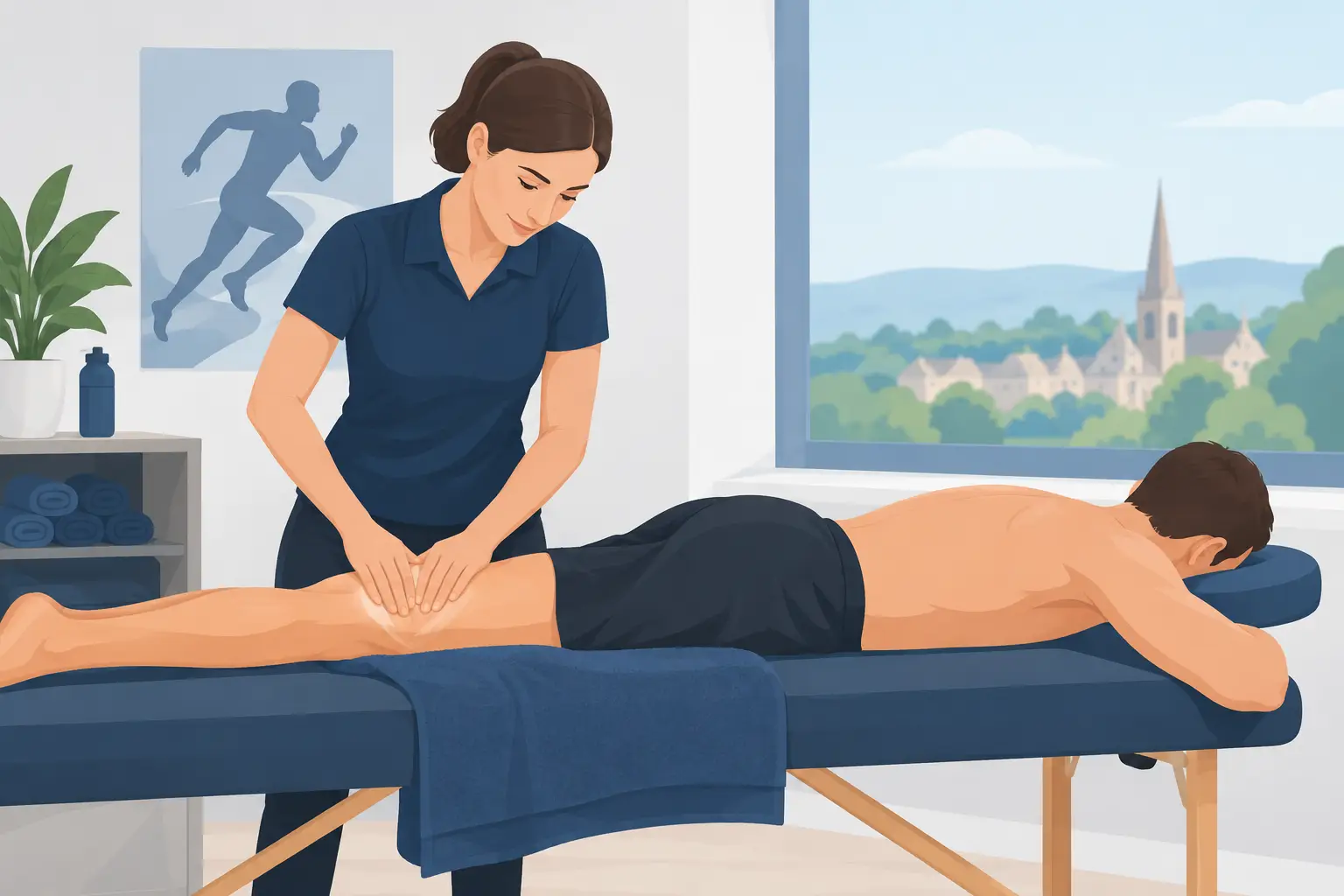
Depending on the findings, care may include hands-on treatment, tailored rehabilitation exercises, soft-tissue work, acupuncture, advice on pacing activity or ergonomic support. The right approach depends on the cause of your symptoms, your medical history and what you need to get back to doing. Passive treatment may ease discomfort, but the most durable progress usually comes from combining symptom relief with active rehabilitation and practical changes.
At Faringdon Wellbeing Clinic, osteopathy, physiotherapy, sports and remedial massage, acupuncture and ergonomic assessment can be considered as part of an individually tailored plan. Where symptoms are more complex, coordinated input from the wider clinical team can help ensure that care remains focused on your function, recovery and confidence.
Seek urgent medical help for warning signs
Most neck stiffness is not serious, but some symptoms need prompt medical attention. Seek urgent advice following a significant fall, collision or other trauma, especially if pain is severe or you cannot move your neck normally. You should also seek urgent assessment for new weakness, numbness or tingling in both arms or legs, difficulty walking, loss of coordination, changes in bladder or bowel control, or severe pain that is rapidly worsening.
A stiff neck with fever, a severe headache, a rash, confusion, marked drowsiness or sensitivity to light also requires urgent medical assessment. Do not try to manage these symptoms with exercises or massage alone.
Neck stiffness can be frustrating, particularly when it interrupts sleep, work or the activities that help you feel like yourself. Start gently, stay curious about the patterns behind it, and give your body regular opportunities to move. If it is not settling or you are unsure what is safe, a personalised assessment can provide a clearer route back to comfortable everyday movement.